Planning a Product Launch Event: A Step-by-Step Guide for Maximum Impact
Plan a product launch event that generates buzz, media coverage, and sales. Step-by-step guide covering pre-launch, day-of, and post-launch strategy.
February 24, 202611 min read
Introduction
A product launch event is one of the highest-stakes events a company can produce. Unlike a conference or a gala, a launch has a singular purpose: create maximum awareness, excitement, and demand for something that did not exist in the public consciousness yesterday.
When Apple unveils a new product, the entire tech world stops and watches. When Tesla reveals a prototype, it dominates global news cycles for days. These companies have mastered the art of the launch event — but the principles behind their approach are not exclusive to trillion-dollar brands.
According to a 2025 EventMB study, 78% of marketers rank live events as the most effective channel for product launches, ahead of digital advertising (56%), social media (52%), and PR campaigns (47%). The reason is simple: a live event creates a shared, visceral, time-bound experience that no other channel can replicate.
This guide walks you through every phase of planning a product launch event that creates genuine market impact — whether your budget is $20,000 or $2,000,000.
Pre-Launch Phase: Building the Foundation (4–6 Months Out)
The work that happens before anyone knows about your event determines its success. This phase is about strategic alignment, audience targeting, and creating the conditions for maximum impact.
DEFINE YOUR LAUNCH OBJECTIVES
Not all launches are created equal. Clarify which of these objectives is primary:
• Market awareness — introducing a new product or category to the market
• Demand generation — driving pre-orders, sign-ups, or sales commitments
• Media coverage — earning press coverage that amplifies your message beyond the event audience
• Partner and channel activation — equipping sales teams, distributors, or partners to sell the product
• Industry positioning — establishing thought leadership and competitive differentiation
Your primary objective shapes every subsequent decision — venue size, invitation list, content format, and success metrics.
BUILD YOUR AUDIENCE STRATEGY
A product launch audience is not about volume. It is about precision. The right 200 people in the room will generate more impact than 2,000 unqualified attendees.
Audience segments to consider:
• Media — journalists, bloggers, podcast hosts, and analysts who cover your industry
• Influencers — individuals with engaged audiences in your target market
• Key customers — existing customers who can become early advocates
• Prospects — high-value potential customers who are actively evaluating solutions
• Partners — channel partners, resellers, integration partners, and strategic allies
• Internal stakeholders — sales teams, customer success, leadership, and the product team itself
• Investors — if applicable, investors and board members
CREATE A MEDIA STRATEGY
Media coverage amplifies your launch exponentially. A single article in the right publication can reach more people than the event itself.
4–6 months out:
• Build a targeted media list (50–100 journalists and analysts who cover your space)
• Identify 5–10 "must-have" media targets and develop personalized outreach plans
• Begin relationship building — share industry insights, comment on their articles, engage on social media
2–3 months out:
• Send embargoed previews to your top 5–10 media contacts
• Prepare a comprehensive press kit: product fact sheet, high-resolution images, executive bios, relevant data points, and customer quotes
• Arrange exclusive pre-event briefings with priority media
1 month out:
• Send formal event invitations to your full media list
• Confirm media attendance and any special requirements (interview rooms, demo access, photography credentials)
• Prepare spokesperson talking points and media training
INFLUENCER OUTREACH
Influencer marketing during product launches drives 11x higher ROI than traditional digital advertising, according to a 2025 Influencer Marketing Hub report.
• Identify 15–30 influencers whose audience matches your target customer profile
• Offer exclusive early access or behind-the-scenes content in exchange for event coverage
• Provide a "launch kit" — product samples, key messages, branded content assets
• Negotiate coverage terms in advance (posts, stories, reviews, unboxing videos)
• Consider a separate influencer-only pre-event experience for deeper engagement
Pre-Launch Phase: Production Planning (2–4 Months Out)
VENUE SELECTION
Your venue should reinforce your product story. Consider:
• Does the space match your brand? A tech startup launching an AI product should not be in a ballroom with chandeliers. A luxury brand should not be in an industrial warehouse (unless that is the intentional aesthetic).
• Can it accommodate your demo requirements? Product demos are the centerpiece — ensure the venue has the power, connectivity, space, and lighting you need.
• Is it accessible to your audience? For media-heavy events, proximity to major press hubs matters.
• Does it photograph and film well? Every inch of your event will be shared on social media.
Venue types for launches:
• Branded pop-up spaces (maximum control, highest cost)
• Art galleries and museums (visual impact, limited customization)
• Hotel ballrooms (reliable, scalable, can feel generic)
• Company headquarters or campus (authentic, but limited capacity)
• Outdoor venues (memorable, weather-dependent)
STAGING AND DEMO FLOW
The demo is the heart of your launch event. Design it with theatrical precision.
The Apple Playbook (adapted for any brand):
1. Set the context (5–10 minutes) — Why does this product exist? What problem does it solve? What is the market opportunity?
2. The reveal (2–5 minutes) — The first time the audience sees the product. Make it dramatic. Lighting, sound, and staging should build to this moment.
3. The walkthrough (15–20 minutes) — Demonstrate key features with real use cases. Show, do not tell. Live demos always outperform pre-recorded videos in engagement.
4. The proof (5–10 minutes) — Customer testimonials, beta tester results, performance data. Third-party validation builds credibility.
5. The ask (3–5 minutes) — Clear call to action. Pre-order now, sign up for early access, schedule a demo, or visit the product page.
6. Hands-on experience (open-ended) — Let attendees touch, try, and experience the product themselves. Station product experts at demo stations.
Critical staging details:
• Test every demo scenario at least five times in the actual venue
• Have backup hardware for every piece of demo equipment
• Script transitions between segments (dead air kills momentum)
• Invest in professional lighting and sound — they transform the perceived quality of the experience
BUDGET PLANNING FOR PRODUCT LAUNCHES
Product launch events typically cost $300–$800 per attendee for mid-scale events and $1,000–$3,000+ per attendee for premium, high-production launches.
Budget allocation framework:
Category: Venue and catering | Percentage of Total Budget: 25–35%
Category: Production (AV, staging, lighting) | Percentage of Total Budget: 25–35%
Category: Content and creative (video, design, materials) | Percentage of Total Budget: 10–15%
Category: Media and influencer program | Percentage of Total Budget: 5–10%
Category: Technology (registration, streaming, analytics) | Percentage of Total Budget: 5–10%
Category: Staffing and logistics | Percentage of Total Budget: 5–10%
Category: Contingency | Percentage of Total Budget: 10%
For smaller brands with limited budgets, prioritize production quality and media outreach over venue extravagance. A stunning product reveal in a modest space outperforms a mediocre demo in a lavish venue every time.
Virtual vs. In-Person vs. Hybrid Launches
Each format has distinct advantages. Choose based on your objectives, audience, and budget.
IN-PERSON LAUNCH
Best for: Premium products, media-heavy launches, products that need hands-on experience, relationship-intensive industries.
Advantages: Maximum emotional impact, hands-on product demos, media photo/video opportunities, networking and deal-making.
Limitations: Geographic reach is limited, higher cost, weather and logistics risk.
VIRTUAL LAUNCH
Best for: Software and digital products, global audiences, budget-constrained launches, time-sensitive releases.
Advantages: Unlimited audience size, lower cost (typically 30–50% of in-person), on-demand content extends the launch window, detailed engagement analytics.
Limitations: Harder to create excitement, no hands-on product experience, lower media impact, higher drop-off rates.
HYBRID LAUNCH
Best for: High-profile launches that need both local media impact and global reach, products with both physical and digital components.
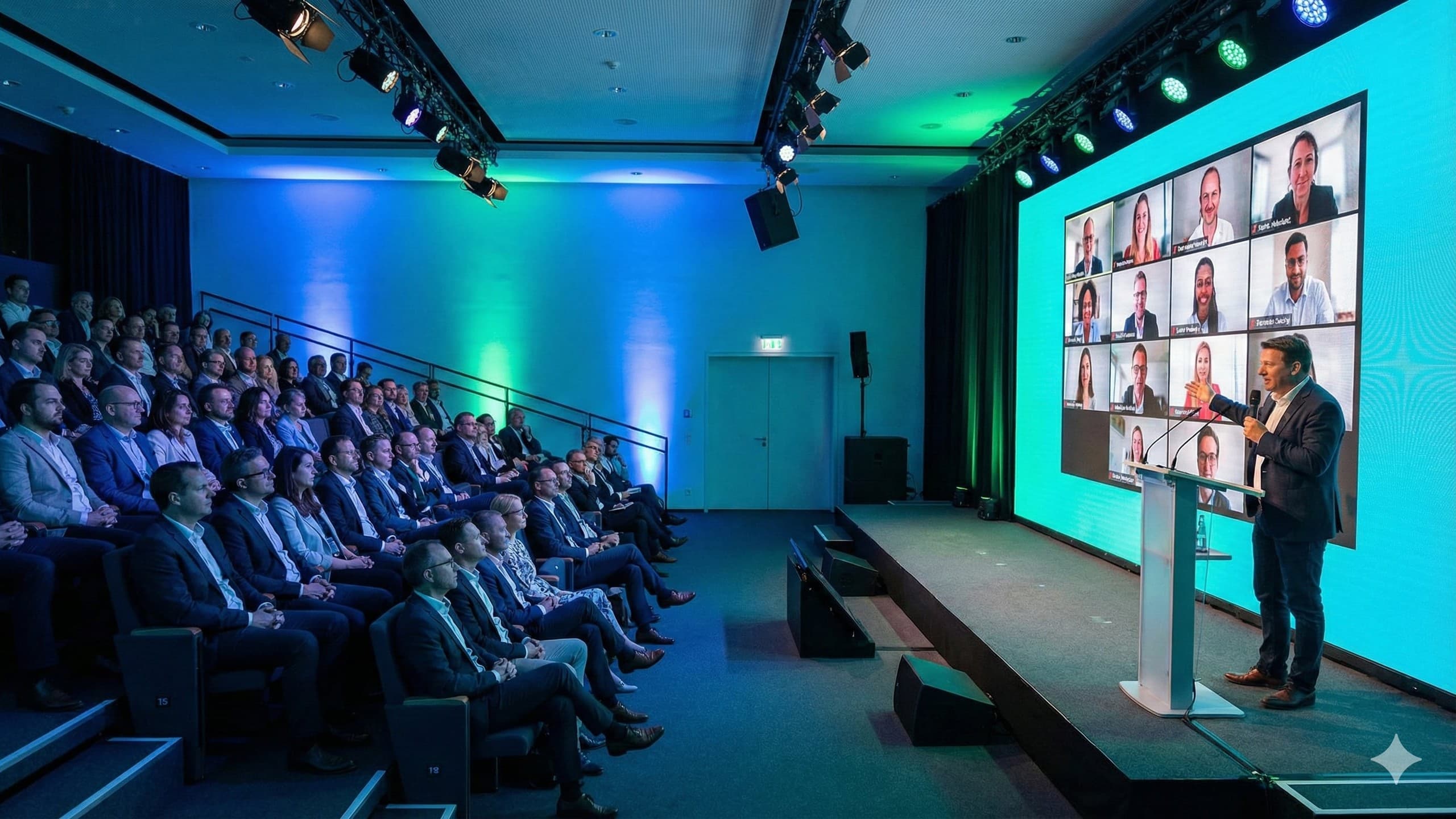
Advantages: Best of both worlds — local media and influencer impact plus global virtual audience. A 2025 Bizzabo survey found that hybrid product launches generate 3.2 times the total reach of in-person-only events.
Limitations: Highest complexity, requires separate production for each audience, risk of virtual audience feeling secondary.
If you choose a hybrid format, plan the in-person and virtual experiences as two distinct products that share a common content core. Use professional production for the stream — a tripod camera pointed at the stage is not acceptable for a launch event.
Managing Your Launch Audience
Product launches involve complex audience segmentation that standard event tools were not built for. You are managing media RSVPs separately from customer invitations, tracking VIP confirmations separately from general attendees, and coordinating press credentials alongside general registration.
Eventifia's attendee segmentation features let you manage these distinct groups within a single platform — creating separate invitation tracks and RSVP workflows for each audience segment while maintaining a unified view of your total event. Your PR team can manage the media list, your sales team can manage VIP customer invitations, and your marketing team can oversee general registration — all with appropriate access levels and no crossed wires.
Launch Day Execution
MORNING TIMELINE
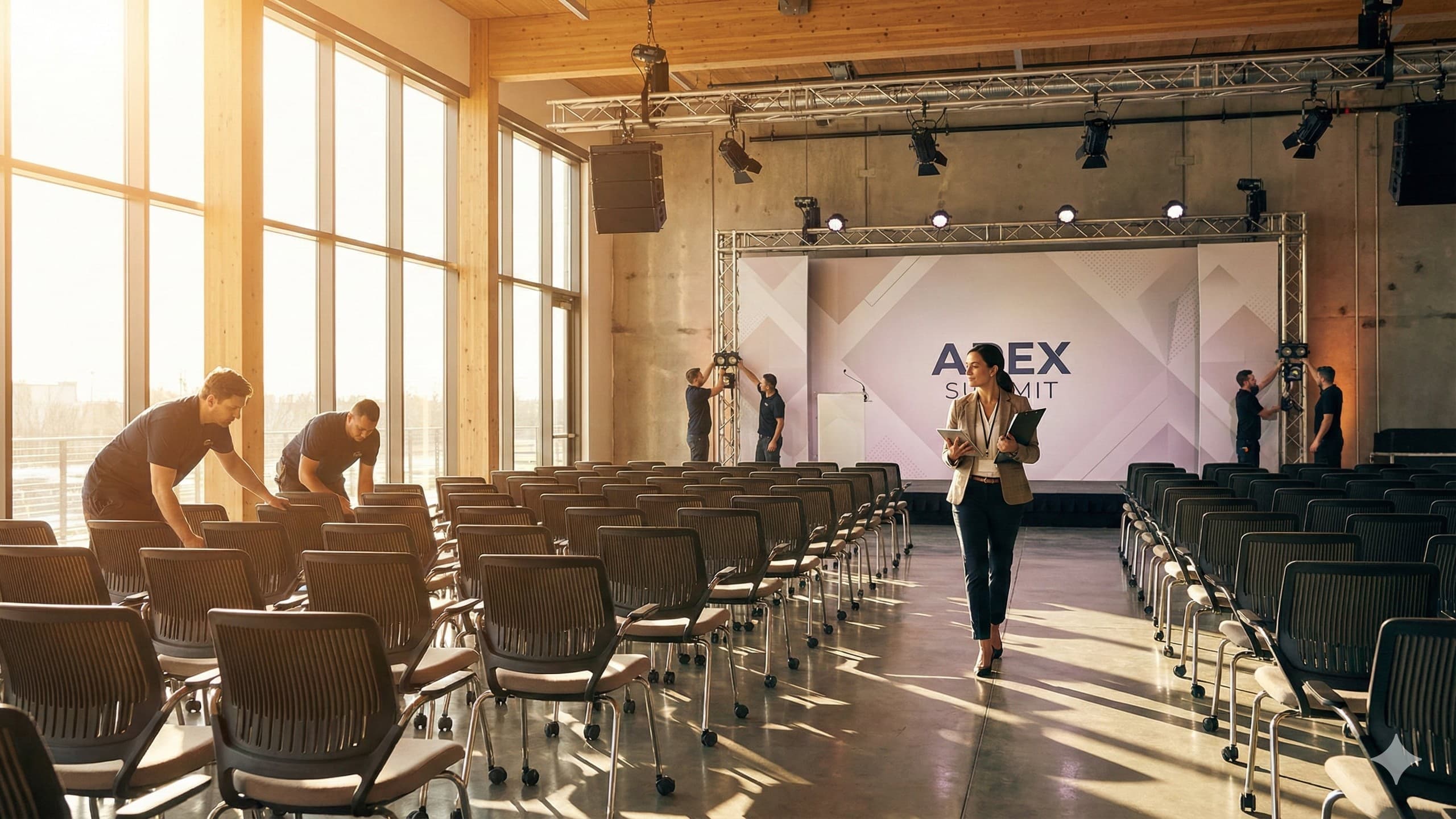
T-minus 4 hours: Production team arrives, begins setup and testing
T-minus 3 hours: AV and lighting check with actual demo equipment
T-minus 2 hours: Full run-through with speakers and demo presenters
T-minus 1 hour: Registration and check-in stations open, media check-in begins
T-minus 30 minutes: VIP and speaker green room opens, final briefing
T-minus 15 minutes: Doors open to general audience, pre-show content plays
T-zero: Launch event begins
DURING THE EVENT
• Dedicate someone to media management — a liaison who greets press arrivals, escorts them to reserved seating, facilitates interviews, and ensures they have everything they need
• Station product experts at demo stations — these people should know the product inside and out and be coached on messaging
• Capture everything — professional photographer, videographer, and a social media team posting in real time
• Monitor social media in real time — track your event hashtag and respond to posts, especially from media and influencers
• Manage the energy — music, lighting transitions, and pacing keep the audience engaged between segments
MEDIA HANDLING
• Provide a dedicated media room with power, Wi-Fi, and refreshments
• Schedule one-on-one interviews with executives in 15-minute blocks
• Offer B-roll footage and high-resolution product images for immediate download
• Have a spokesperson available for on-camera interviews throughout the event
• Distribute embargo-lift timing clearly and honor it strictly
Post-Launch Phase: Maximizing Impact
The event is the spark. The post-launch phase fans it into a sustained fire.
IMMEDIATE FOLLOW-UP (WITHIN 24–48 HOURS)
• Press release distribution — timed to coincide with embargo lift
• Media follow-up — personal emails to every journalist who attended, offering additional information, quotes, or interviews
• Attendee thank-you emails — include event highlights, product information, and a clear call to action
• Social media content — event highlights, product hero shots, audience reactions, behind-the-scenes content
• Sales team enablement — share event recordings, demo scripts, and attendee engagement data with the sales team immediately
CONTENT REPURPOSING
A single launch event should generate content for weeks:
• Full event recording edited into a polished launch video
• Keynote presentation converted into a blog post or whitepaper
• Individual demo segments cut into social media clips (30–60 seconds each)
• Speaker quotes and soundbites for social media and email marketing
• Behind-the-scenes content for humanizing your brand
• Customer testimonial videos captured at the event
• Photo gallery for press use and social media
LEAD NURTURE
Not every attendee will buy on launch day. Build a post-event nurture sequence:
Week 1: Event recap and product overview
Week 2: Deep-dive content on key features
Week 3: Customer testimonials and case studies
Week 4: Limited-time launch offer or incentive
Week 6: Follow-up survey and product feedback request
Week 8: Product update or new feature announcement
Segment your nurture based on attendee behavior. Someone who spent 30 minutes at the demo station is a warmer lead than someone who left after the keynote.
Common Pitfalls to Avoid
1. Over-promising and under-delivering. If your product is not ready for a live demo, do not do a live demo. A polished pre-recorded demonstration is infinitely better than a live demo that crashes on stage.
2. Burying the product in corporate messaging. Attendees came to see the product. Get to it within the first 15 minutes. Save the corporate vision speech for the annual report.
3. Neglecting the hands-on experience. The reveal gets attention. The hands-on experience creates advocates. Budget for enough demo stations to eliminate wait times.
4. Ignoring follow-up. A 2025 InsideSales study found that leads contacted within one hour of expressing interest are seven times more likely to convert. Your fastest competitors are following up the same day.
5. Not measuring impact. Define success metrics before the event and track them religiously: media mentions, social reach, demo requests, pipeline generated, sales closed within 30/60/90 days.
The Complete Launch Event Timeline
Timeframe: 6 months out | Action Items: Define objectives, begin audience strategy, start media relationship building
Timeframe: 4 months out | Action Items: Select and book venue, begin production planning, launch influencer outreach
Timeframe: 3 months out | Action Items: Finalize event format and content, open registration, begin promotion
Timeframe: 2 months out | Action Items: Confirm all vendors, finalize demo flow, begin media briefings
Timeframe: 1 month out | Action Items: Production rehearsals, attendee communications, press kit finalization
Timeframe: 2 weeks out | Action Items: Full venue rehearsal, confirm all attendees, ship influencer kits
Timeframe: 1 week out | Action Items: Final run-through, pre-event media briefings, team briefing
Timeframe: Day of | Action Items: Execute launch event
Timeframe: Day 1–2 post | Action Items: Press release, media follow-up, attendee thank-you, social content
Timeframe: Week 1–8 post | Action Items: Lead nurture sequence, content repurposing, sales enablement, ROI analysis
Launch With Precision
A product launch event is not just a party for your product. It is a carefully orchestrated campaign that creates market momentum, generates media coverage, and accelerates your sales pipeline.
The companies that execute launches well do not leave anything to chance. They plan methodically, rehearse obsessively, and follow up relentlessly.
Eventifia gives you the attendee management infrastructure to match that level of precision — from segmented VIP and media RSVP tracking to real-time check-in dashboards and post-event analytics. When your launch day arrives, you should be focused on delivering an unforgettable product experience, not wrestling with spreadsheets and manual attendee lists.
Plan your next product launch with Eventifia at eventifia.com — and make sure the world pays attention.