How to Plan a Wedding on a Budget Without Sacrificing Style
Discover proven strategies to plan a beautiful wedding on a budget in 2026. Real cost breakdowns by guest count, smart saving tips, and DIY ideas.
February 24, 202611 min read
Introduction
Let's get one thing straight: a budget wedding is not a lesser wedding. Some of the most beautiful, memorable, and genuinely joyful celebrations we have ever seen were planned by couples who were intentional about where every dollar went. The difference between a budget wedding that feels cheap and one that feels elegant is not money — it is strategy.
The average American wedding in 2026 costs approximately $35,000, according to The Knot's annual survey. That figure has climbed steadily over the past decade, driven by post-pandemic pent-up demand, inflation in the catering and venue industries, and the growing influence of social media setting ever-higher visual expectations. But here is the number that matters more: nearly 40% of couples exceed their original budget by 20% or more.
That does not have to be your story. Whether you are working with $10,000, $20,000, or trying to keep a larger wedding under control, this guide will show you exactly where to save, where to spend, and how to make smart tradeoffs that preserve the things that actually matter to you.
Understanding Real Wedding Costs in 2026
Before you can save money, you need to understand where it actually goes. Here is a realistic breakdown of average costs by wedding size in 2026, based on industry data:
50-GUEST WEDDING: $12,000 - $18,000
Category: Venue | Budget Range: $2,000 - $4,500
Category: Catering and bar | Budget Range: $3,000 - $5,000
Category: Photography | Budget Range: $1,500 - $2,500
Category: Flowers and decor | Budget Range: $800 - $1,500
Category: Attire and beauty | Budget Range: $1,000 - $2,000
Category: Music | Budget Range: $500 - $1,000
Category: Stationery | Budget Range: $200 - $400
Category: Officiant | Budget Range: $200 - $500
Category: Miscellaneous | Budget Range: $800 - $1,500
100-GUEST WEDDING: $22,000 - $35,000
At 100 guests, catering becomes your largest single expense, typically consuming 45-50% of your total budget. Venue costs may also jump as you need a larger space. Photography and entertainment remain relatively fixed regardless of guest count, which is why these become a smaller percentage of the total.
200-GUEST WEDDING: $38,000 - $60,000
At this scale, every per-person cost is amplified. A $5 difference in your per-plate catering cost translates to $1,000. This is the guest count where small decisions create large financial impacts, and where organization becomes critical to avoiding waste and overages.
The Five Highest-Impact Ways to Save
Not all budget cuts are created equal. Some save you $50 with visible quality loss. Others save you $5,000 with zero impact on your guest experience. Focus here first.
1. CHOOSE YOUR DATE STRATEGICALLY
The single biggest lever you can pull is your wedding date. Peak season (May through October, especially Saturdays) commands premium pricing from nearly every vendor. Off-peak advantages include:
• Friday or Sunday weddings save 20-30% on venue rental compared to Saturday
• January through March weddings (excluding Valentine's Day weekend) can save 25-40% on venues and many vendors
• Brunch or lunch receptions cost 30-40% less in catering than evening events
• Holiday weekends are a double-edged sword — some vendors offer deals, but guest travel costs increase
A Sunday brunch wedding in February at the same venue that charges $15,000 for a Saturday evening in June might cost you $8,000. Same space, same quality, dramatically different price.
2. MANAGE YOUR GUEST LIST RUTHLESSLY
This is the hardest advice to follow and the most impactful. Every guest you add costs $100-$250 in per-person expenses (food, drink, rentals, favors, invitations). Cutting 20 guests saves $2,000-$5,000.
Be honest about your relationships. If you have not spoken to someone in two years, their presence at your wedding is not going to magically rekindle the friendship. Create your guest list based on who you genuinely want to share this day with, not obligation or guilt.
The A-list/B-list strategy works well here: invite your must-have guests first, wait for declines, then extend invitations to your B-list. Just be discreet — no one should ever know they were on a B-list.
3. RETHINK YOUR VENUE
The venue is typically your largest expense, and it is also where the biggest savings opportunities hide.
Non-traditional venues that save money:
• Public parks and gardens (permit fees of $100-$500 versus venue fees of $3,000-$10,000)
• Restaurants with private dining rooms (food and space in one cost)
• Family or friend's property (backyard weddings require rentals but eliminate venue fees)
• Community centers, libraries, and historical societies
• Art galleries and museums (many offer event packages at surprisingly reasonable rates)
• Breweries and wineries (especially for smaller weddings)
What to watch for: Non-traditional venues often require you to bring in everything — tables, chairs, linens, lighting, catering, restrooms. Get quotes for these items before assuming you are saving money. A "free" backyard wedding can cost $5,000 or more in rentals alone.
4. SIMPLIFY YOUR FLOWERS
Floral budgets in 2026 have climbed significantly, with the average couple spending $2,500-$3,500. Here is how to get beautiful results for less:
• Limit the variety. Choose 2-3 flower types in season rather than elaborate mixed arrangements. Monochromatic bouquets with a single flower type look intentionally elegant, not budget-constrained.
• Use greenery liberally. Eucalyptus, ferns, and olive branches cost a fraction of flowers and create lush, full arrangements.
• Repurpose ceremony flowers. Have your florist design ceremony arrangements that can be moved to the reception space during cocktail hour.
• Skip individual table centerpieces. Consider a single statement installation — a garland running down the center of a long table, or greenery draped across a mantel — instead of 15 separate arrangements.
• Explore alternatives. Candles in varying heights, potted plants guests can take home, or dried flower arrangements that can be assembled weeks in advance.
5. PRIORITIZE PHOTOGRAPHY, DEPRIORITIZE VIDEOGRAPHY
If you need to make a hard choice between photography and videography, most couples who look back years later wish they had invested in great photography. A skilled photographer with 6-8 hours of coverage ($2,000-$3,500) captures the day in a way you will revisit for decades.
If you still want video coverage, consider alternatives: ask a trusted friend with a good phone to record key moments, hire a videographer for ceremony-only coverage (2 hours instead of 8), or use a service that compiles phone footage from multiple guests.
Smart DIY: What to Do Yourself and What to Leave to Professionals
The DIY trap is real. Many couples overestimate how much time they have and underestimate how much stress last-minute crafting creates. Here is an honest breakdown.
WORTH DIYING
• Signage: Welcome signs, table numbers, and directional signs are easy wins with free templates from Canva
• Favors: Simple, uniform items like cookies in cellophane bags, small succulents, or custom stickers on candy bars
• Playlists: A well-curated Spotify playlist through a good sound system works beautifully for cocktail hours and smaller receptions
• Invitations: Digital invitations eliminate printing and postage costs entirely. A polished digital invitation sent through a platform like Eventifia looks professional, tracks RSVPs automatically, and costs a fraction of printed stationery
• Welcome bags: Assemble hotel welcome bags yourself with locally sourced snacks and a printed itinerary
NOT WORTH DIYING
• Your own wedding cake: Unless you are a professional baker, this is a recipe for stress and disappointment. Order a simple, elegant cake from a local bakery instead.
• Hair and makeup: This is one area where professional results are visually obvious in photographs. Budget for at least the bride's hair and makeup.
• Sound and lighting: Bad sound ruins a reception faster than almost anything. If you are not hiring a DJ, at least rent professional speakers and test the setup before the day.
• Day-of coordination: You cannot coordinate your own wedding and be present in it. If you cannot afford a full planner, hire a day-of coordinator for $500-$1,500.
Where Couples Actually Overspend (And Do Not Realize It)
These are the silent budget killers that sneak up on otherwise careful planners:
Overtime charges. Most venue and vendor contracts have hard end times. Going over by even 30 minutes can trigger $500-$1,000 in overtime fees. Build buffer time into your timeline so you are never caught off guard.
"While we're at it" additions. Vendors are skilled at upselling during the planning process. That extra hour of coverage, the upgraded linen package, the custom cocktail station — each one seems small, but they compound. Keep a running total and check it against your budget before approving any addition.
Guest count inflation. You budgeted for 100 guests but invited 120 expecting some declines. When 115 accept, your per-person costs just jumped by 15%. Be conservative in your estimates and plan for higher acceptance rates than you expect (typically 75-85% of invited guests will attend).
Stationery suite creep. Save-the-dates, invitations, RSVP cards, detail cards, programs, menu cards, place cards, thank-you cards — the traditional paper suite can easily cost $1,000-$2,000. Digital alternatives for most of these items save money without sacrificing communication clarity.
Building Your Budget Spreadsheet
Your budget tracker should include these columns at minimum:
1. Category (venue, catering, photography, etc.)
2. Estimated cost (your initial budget for this category)
3. Actual cost (updated as you book vendors)
4. Deposit paid (and date)
5. Balance due (and due date)
6. Notes (contract details, contact info, special arrangements)
Review this document together every two weeks. Budget overruns happen incrementally — $200 here, $300 there — and regular check-ins catch them before they snowball.
Real Budget-Friendly Alternatives That Look Expensive
• Mismatched vintage china rented from a specialty company creates an elevated, editorial look for the same cost as standard white plate rentals
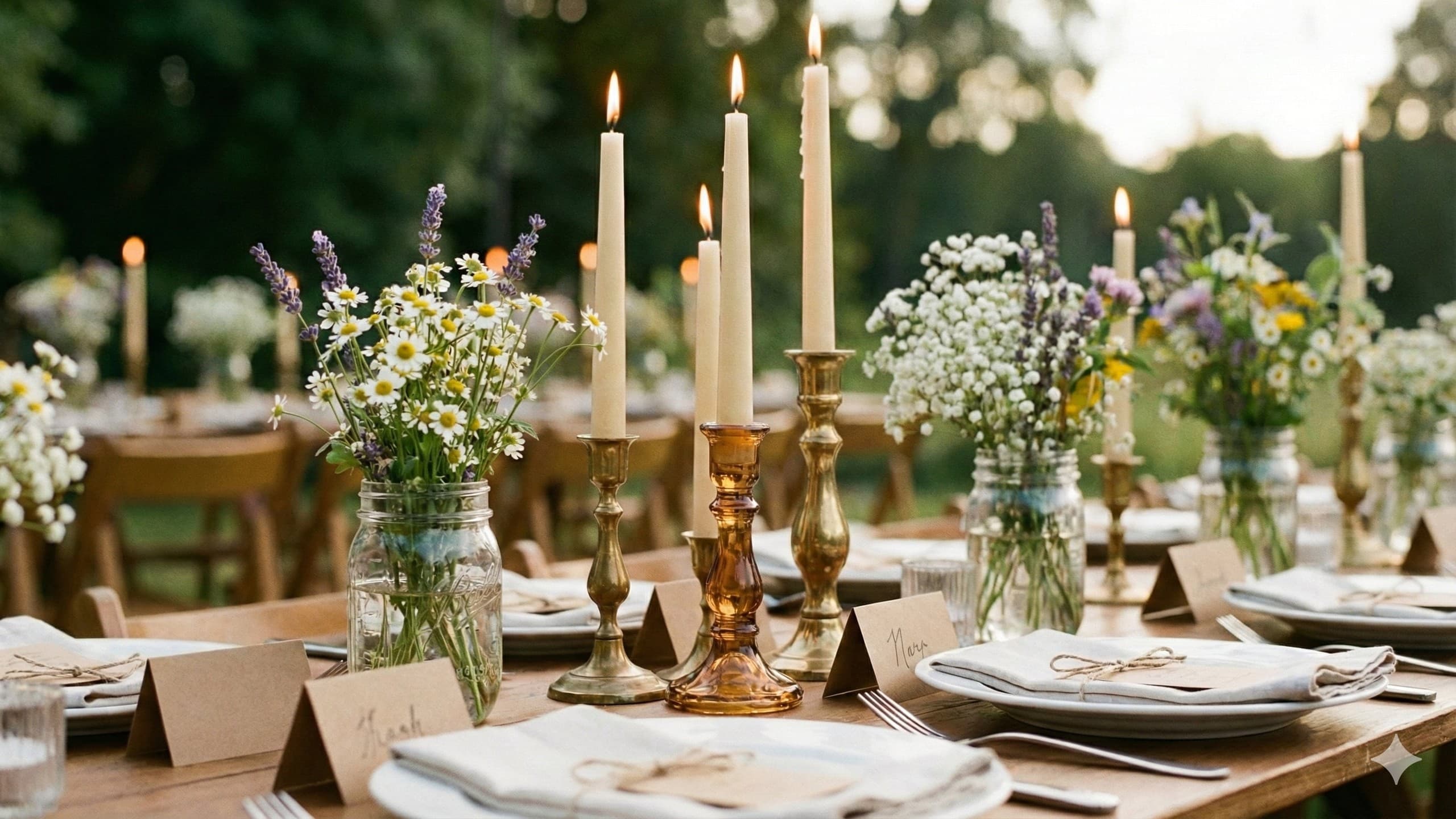
• Pillar candles in varying heights down the center of tables create ambiance that rivals expensive floral arrangements
• A dessert table with homemade contributions from family and friends replaces a $500-$800 wedding cake with something more personal
• Spotify playlist through quality speakers during cocktail hour, with a DJ only for the reception dance portion, cuts music costs by 40%
• An emerald-green or navy-blue velvet tablecloth from a linen rental company transforms a basic banquet table into something that looks intentionally designed
• Fairy lights draped across a ceiling or wrapped around trees cost $50-$100 and create a magical atmosphere that photographs beautifully
Making Technology Work for Your Budget
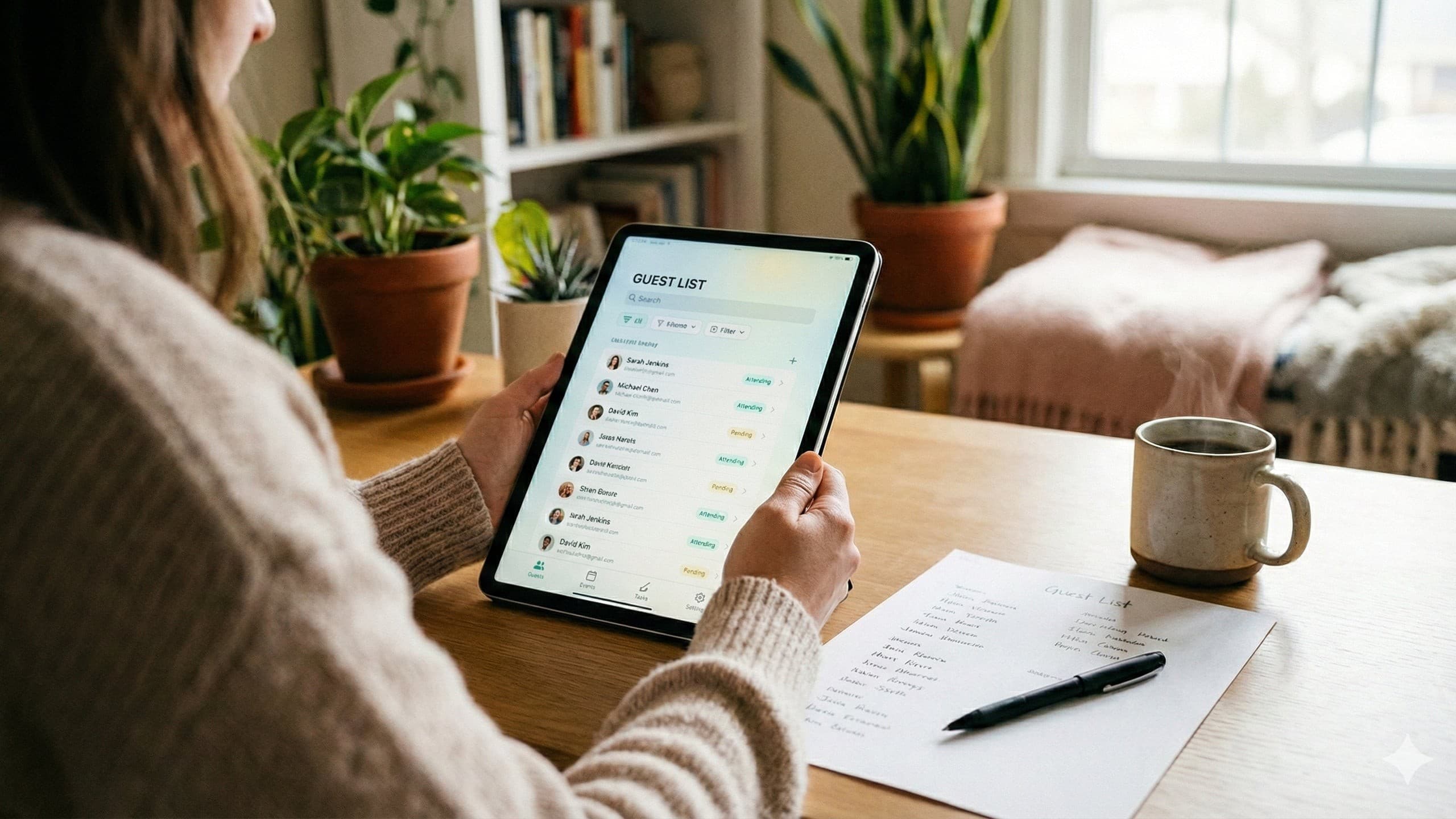
One of the most overlooked budget-saving strategies is using the right planning tools. Couples who track their guest list, RSVPs, and event details digitally instead of through scattered spreadsheets, text messages, and paper lists make fewer costly errors.
Overordering food because your RSVP count was inaccurate costs real money. Printing physical invitations that need to be reprinted because of an address error costs real money. Losing track of a vendor payment deadline and incurring a late fee costs real money.
Eventifia's Starter plan is built for exactly this scenario — couples who want professional-grade guest management, RSVP tracking, and digital invitations without adding another major expense to their budget. When your planning tool costs less than a single centerpiece, the return on investment is immediate.
A Realistic Budget Wedding Timeline
If you are planning a budget-conscious wedding, give yourself slightly more time than average. Bargain-hunting, DIY projects, and vendor comparisons take longer than writing checks for premium options.
• 14-12 months out: Set budget, begin venue search focusing on off-peak dates and non-traditional spaces
• 10-8 months out: Book vendors after getting at least three quotes per category
• 8-6 months out: Begin DIY projects in manageable batches, not marathon sessions
• 6-4 months out: Send digital invitations and begin RSVP tracking
• 4-2 months out: Finalize details, confirm vendor payments, make seating charts
• 1 month out: Complete all DIY projects, confirm everything, and stop spending money
The Bottom Line
A beautiful wedding is not about how much you spend. It is about making intentional choices that reflect what matters most to you as a couple. If incredible food is your priority, allocate more there and scale back on flowers. If dancing all night is your dream, invest in a great band and simplify the decor. If being surrounded by everyone you love is what matters, choose a less expensive venue to accommodate more guests.
The couples who feel best about their wedding budget are not the ones who spent the least — they are the ones who spent deliberately. Every dollar went somewhere that mattered to them, and nothing was wasted on details that did not.
Your wedding should be the start of your marriage, not the start of financial stress. Plan with your eyes open, your priorities clear, and your spreadsheet updated. The celebration you create will be exactly right, because it will be exactly yours.
Ready to start planning your budget-friendly wedding? Create your Eventifia account and manage your guest list, RSVPs, and digital invitations — all in one place, without adding to your budget.