Sustainable Weddings: How to Plan an Eco-Friendly Celebration in 2026
Plan a sustainable, eco-friendly wedding in 2026 with our complete guide. Covers venues, catering, decor, fashion, invitations, and reducing your carbon footprint.
February 24, 202611 min read
Introduction
When you think about the environmental impact of a single traditional wedding, the numbers are sobering. The average wedding generates approximately 400 pounds of waste and produces a carbon footprint of 57 tons of CO2, according to a 2024 report by Green Wedding Alliance. That is roughly equivalent to the annual carbon footprint of 4-5 average Americans — compressed into a single day.
The waste streams are tangible: thousands of paper invitations, single-use floral arrangements that die within days, food waste from overestimated headcounts, plastic-wrapped favors that end up in landfills, fast-fashion bridesmaid dresses worn once, and the carbon emissions from dozens of guests flying across the country.
But here is the counterpoint: none of this is inevitable. Every element of a wedding represents a choice, and in 2026, couples have more sustainable alternatives than ever before. Over 50% of couples now say sustainability influences their wedding decisions, according to The Knot's 2025 survey — a dramatic increase from just 24% in 2019. This is not a niche trend. It is a fundamental shift in how a generation approaches celebration.
This guide is practical, not preachy. It covers the highest-impact changes you can make, the tradeoffs involved, and how to plan a wedding that is both environmentally responsible and genuinely beautiful. Because the two are not in conflict — they never were.
Starting With the Biggest Impact: Venue Selection
Your venue choice is the single largest sustainability lever you have. The building's energy source, its location relative to your guests, whether it requires extensive decor to look event-ready — all of these factors compound into your wedding's largest environmental footprint category.
OUTDOOR VENUES
Parks, gardens, farms, vineyards, and beaches are inherently lower-impact than indoor venues. They require minimal lighting during daytime ceremonies, no HVAC, and the natural surroundings often reduce or eliminate the need for decorative installations. Many outdoor venues are already beautiful — you are working with nature, not against it.
Sustainability benefits: Reduced energy consumption, minimal decor needs, natural lighting for photography.
Considerations: You will likely need tent rentals for weather contingency (reusable, but energy-intensive to transport). Restroom facilities may require portable toilets (some companies offer eco-friendly composting options). Sound amplification outdoors requires more power than indoor spaces.
LEED-CERTIFIED AND GREEN VENUES
LEED (Leadership in Energy and Environmental Design) certified buildings meet rigorous environmental standards for energy efficiency, water usage, materials, and indoor environmental quality. A growing number of event venues carry LEED certification or equivalent green building credentials.
These venues use renewable energy, efficient HVAC systems, water recycling, and sustainable building materials. Hosting your wedding in one means your event's energy consumption is already minimized at the infrastructure level.
LOCATION PROXIMITY
A venue that is convenient for the majority of your guests reduces the cumulative carbon footprint of travel — which is often the largest single contributor to a wedding's environmental impact. A beautiful local venue where 80% of guests can drive 30 minutes produces dramatically less emissions than a destination venue requiring 50 guests to fly.
If most of your guests are in one metro area, prioritize venues within that area. If your guest list is geographically diverse and flying is unavoidable, consider purchasing carbon offsets (more on this below).
VENUE QUESTIONS TO ASK
• What is your energy source? (Renewable energy, solar panels, standard grid?)
• Do you have recycling and composting facilities?
• What sustainability practices are in place? (Water conservation, waste reduction, local sourcing?)
• Can we bring our own eco-friendly vendors?
• Do you have outdoor ceremony options to reduce energy use?
Sustainable Catering: Feed People, Not Landfills
Food is the second-largest environmental impact area of a wedding, and it offers some of the most satisfying sustainability wins.
PLANT-FORWARD MENUS
You do not have to serve an all-vegan menu (unless you want to). But shifting the center of the plate from animal protein to vegetables, grains, and legumes significantly reduces your wedding's carbon footprint. Animal agriculture accounts for approximately 14.5% of global greenhouse gas emissions, and a single beef main course generates 7-8 times the emissions of a vegetable-based dish.
Practical approaches:
• Offer one plant-based main and one meat option, rather than two meat options
• Make the plant-based option the default, with meat available by request
• Serve a fully plant-based cocktail hour and offer a meat option only for the main course
• Feature plant-based dishes from cuisines where they are already the star (Indian, Mediterranean, Middle Eastern, Thai) rather than trying to make vegetables imitate meat
Many guests will not notice or care that the menu skews plant-forward if the food is excellent. A mediocre "vegan option" is a stereotype. A stunning roasted cauliflower steak with romesco sauce, or a butternut squash ravioli with brown butter and sage, or a mezze platter with house-made hummus and warm flatbread — these are dishes people genuinely want to eat.
LOCAL AND SEASONAL SOURCING
Ask your caterer about sourcing practices. Ingredients that are local and in-season have a dramatically lower carbon footprint than those shipped across the country or imported. A summer wedding in the Northeast can feature heirloom tomatoes, sweet corn, stone fruits, and local greens. A fall wedding can showcase squash, apples, root vegetables, and local cheeses.
Bonus: seasonal, local food tastes better. The flavor difference between a tomato grown at a farm 20 miles away and one shipped from a warehouse 2,000 miles away is obvious on the plate.
REDUCING FOOD WASTE
The average wedding wastes 15-20% of the food served. Some waste is unavoidable, but much of it results from poor planning:
• Accurate headcounts reduce waste. This is where precise RSVP tracking pays off. If your RSVP count says 142 but you order for 160 "just in case," that buffer becomes 18 wasted meals. A reliable guest management system that gives you real-time confirmed attendance eliminates the need for excessive over-ordering.
• Choose service styles wisely. Plated dinners generate less waste than buffets because portions are controlled. Family-style service falls in between.
• Plan for leftovers. Partner with a local food rescue organization that collects surplus food from events. Many cities have these organizations, and your caterer likely knows them.
• Donate what you can. Untouched, prepared food from buffets can often be donated through organizations like Feeding America or local food banks. Check your city's Good Samaritan laws, which protect food donors from liability.
SUSTAINABLE BAR OPTIONS
• Serve local craft beer, regional wines, and spirits from local distilleries
• Offer a signature cocktail in a large-batch format rather than individual mixed drinks (reduces waste and over-pouring)
• Use real glassware instead of disposable cups
• Skip plastic straws entirely, or offer paper or bamboo alternatives for those who want them
Eco-Friendly Invitations and Communication
The traditional wedding stationery suite — save-the-dates, invitations, RSVP cards, detail cards, programs, menus, place cards, and thank-you notes — can consume a surprising amount of paper. A 150-guest wedding with a full paper suite uses approximately 1,000 pieces of paper, many of which include envelopes, tissue paper inserts, and plastic return-address labels.
DIGITAL INVITATIONS: THE HIGHEST-IMPACT SWITCH
Switching to digital invitations eliminates paper waste entirely and is the single most visible sustainability statement you can make early in the planning process. Digital invitations in 2026 are sophisticated, beautiful, and fully customizable — they are not the e-vites of 2010.
Eventifia's digital invitation platform allows you to design and send multilingual invitations with integrated RSVP tracking, eliminating the need for separate response cards and return postage. Every response is recorded digitally. No paper. No stamps. No envelopes. No printing overruns. No trips to the post office. The environmental savings are real, and the logistical convenience is a bonus.
For couples who want a tangible element, consider a hybrid approach: send a single, beautifully printed save-the-date on recycled paper, then use digital invitations for the formal invitation and RSVP. You get the keepsake quality of paper with the environmental efficiency of digital.
IF YOU CHOOSE PAPER
If printed invitations are important to you (and they can be — sustainability is about better choices, not perfect ones), make them as eco-friendly as possible:
• Recycled paper: Choose 100% post-consumer recycled paper or tree-free alternatives (cotton, hemp, bamboo)
• Seed paper: Invitations embedded with wildflower seeds that guests can plant. These are genuinely charming and eliminate waste entirely.
• Soy-based inks: Less toxic than petroleum-based inks and produce vivid colors
• Minimalist suite: Skip the tissue paper insert, the inner envelope, and the printed RSVP card. Include a QR code for digital RSVP instead.
• Local printers: Reduce shipping emissions by using a printer near you
Sustainable Decor: Beauty Without Waste
Wedding decor is one of the most wasteful categories in traditional wedding planning. Hundreds of flowers cut at their peak, arranged once, and thrown away the next morning. Yards of fabric used for a few hours. Plastic signage, foam floral bases, and single-use decorative elements that go directly to the landfill.
LIVING FLOWERS AND PLANTS
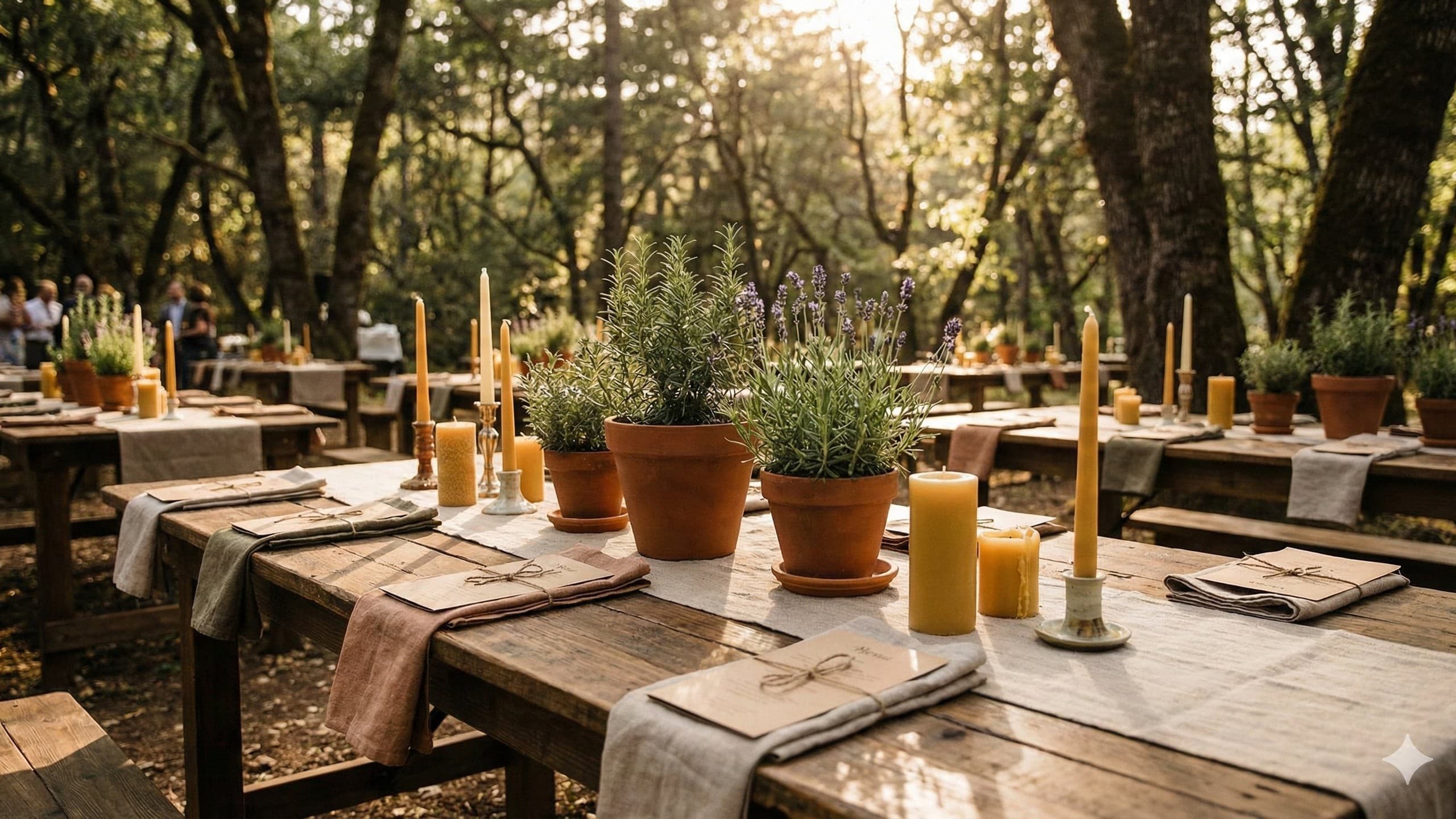
Replace cut floral arrangements with potted plants, succulents, herbs, or small trees. These serve as both decor and favors — guests take them home and continue to enjoy them. A table centerpiece of potted rosemary, lavender, or small olive trees is visually stunning and functional. Potted orchids are elegant. A collection of succulents in mismatched ceramic pots looks intentionally designed and costs less than a traditional floral arrangement.
RENTED AND REPURPOSED DECOR
A growing number of companies specialize in rental decor for events. Candelabras, vases, fabric draping, table runners, furniture, and lighting are all available for rent. You get the look without the waste of purchasing items used only once.
Repurposed decor is another option: vintage furniture from thrift stores, reclaimed wood signs, second-hand lanterns, and fabric from estate sales. Many couples find that the imperfect, vintage aesthetic of repurposed items adds warmth and character that new, matching decor cannot replicate.
CANDLES OVER FLORAL CENTERPIECES
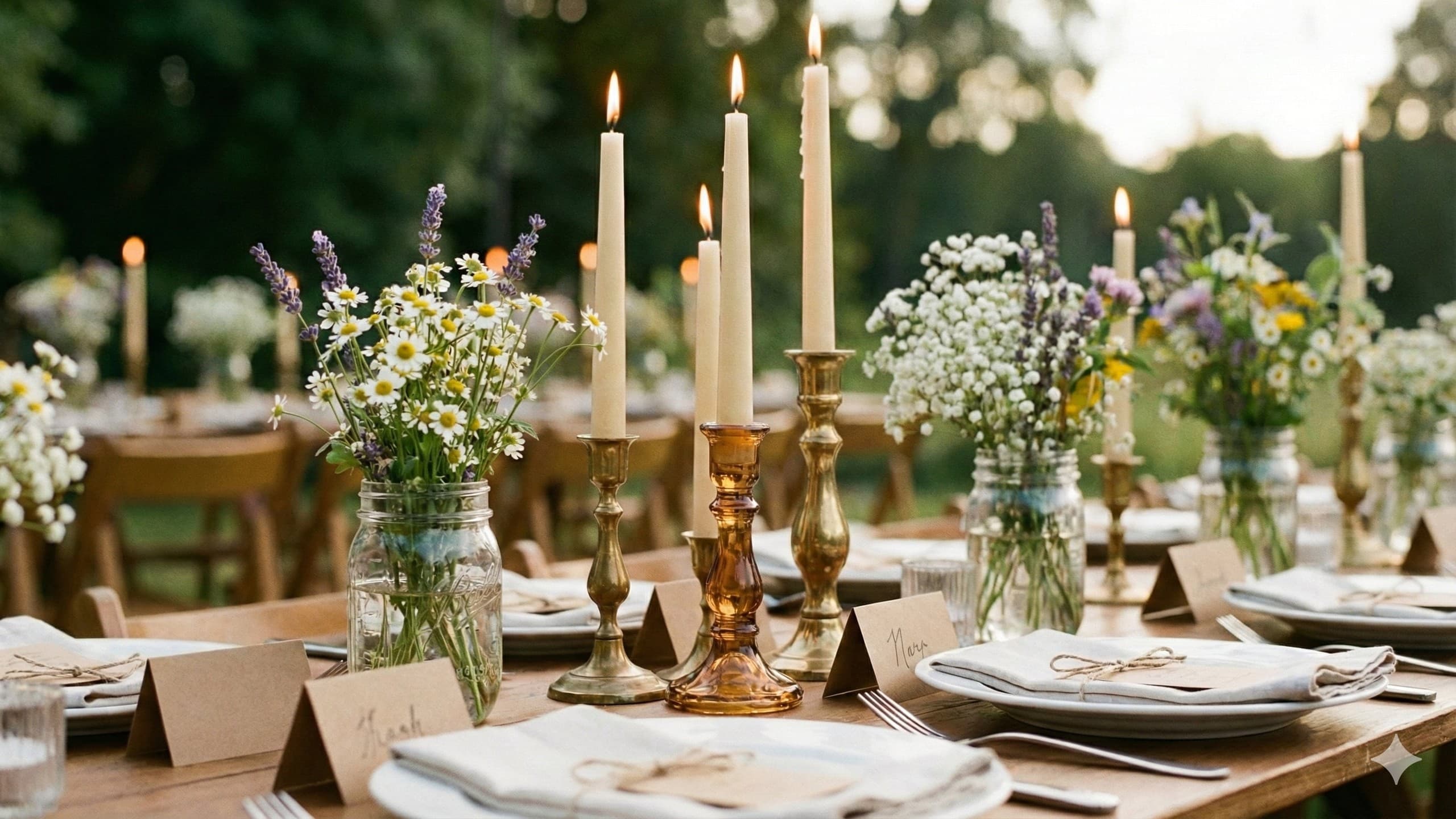
Beeswax or soy candles in varying heights create ambiance that rivals or exceeds elaborate floral arrangements. They are reusable (beeswax candles burn down to nothing without toxic residue), relatively inexpensive, and photograph beautifully. A dinner table with 15-20 candles in varying heights, interspersed with small greenery, is one of the most consistently beautiful reception looks at any budget.
SEASONAL AND LOCAL FLORAL DESIGN
If you do use cut flowers, choose locally grown, seasonal varieties. The environmental cost of flowers flown from South America (where approximately 80% of commercially sold flowers in the U.S. originate) is enormous. A local flower farm offering seasonal varieties — dahlias in late summer, chrysanthemums in fall, forced bulbs in early spring — is more sustainable and supports your local agricultural economy.
Work with a floral designer who practices sustainable methods: using chicken wire instead of floral foam (which is non-biodegradable plastic), composting waste, and designing arrangements that can be repurposed (ceremony flowers move to the reception, reception flowers are donated to a hospital or nursing home the next day).
Ethical Fashion: What You Wear Matters
The fashion industry is one of the world's largest polluters, and the wedding segment is particularly wasteful. A traditional wedding gown is worn for approximately 5-6 hours, then stored in a box indefinitely.
SUSTAINABLE BRIDAL FASHION OPTIONS
• Vintage or pre-owned gowns: Shops like Encore Bridal, Stillwhite, and local consignment stores offer beautiful pre-owned dresses at a fraction of the original price. Wearing a vintage gown is one of the most sustainable fashion choices you can make.
• Rental gowns: Several companies now offer high-end bridal gown rentals. You wear a designer dress for your day and return it to be cleaned and rented again.
• Sustainable designers: Brands like Reformation, Stella McCartney, and Christy Dawn create wedding dresses using sustainable fabrics (organic cotton, recycled materials, deadstock fabrics) and ethical manufacturing practices.
• Reimagined heirloom gowns: Your mother's or grandmother's dress, altered and updated by a skilled tailor, carries emotional significance that no new dress can match.
• Versatile designs: Choose a dress you can wear again. A chic white midi dress, a tailored jumpsuit, or a simple silk slip dress transitions from wedding to future events.
BRIDESMAID AND GROOMSMEN ATTIRE
Ask your wedding party to wear something they already own in a specified color palette, rather than purchasing matching outfits they will wear once. "Wear your favorite black dress" or "Any navy suit" gives your party flexibility, saves them money, and prevents another single-use garment from being manufactured.
Carbon Offsets and the Travel Question
Guest travel is typically the largest single contributor to a wedding's carbon footprint. For a 150-person wedding where 40% of guests fly, the air travel alone can generate 20-30 tons of CO2.
PRACTICAL APPROACHES TO TRAVEL EMISSIONS
• Choose a venue accessible to most guests by car or train. This is the most impactful step.
• Encourage carpooling. Create a ride-share board on your wedding website where guests traveling from the same area can connect.
• Arrange group transportation. A shuttle bus between the hotel and venue is more efficient than 50 individual car trips.
• Purchase verified carbon offsets. Organizations like Gold Standard, Verra, and Cool Effect offer certified carbon offset programs. For approximately $10-$15 per ton of CO2, you can offset your wedding's entire travel footprint. At $15/ton for a 30-ton wedding footprint, the cost is $450 — a meaningful investment in climate action.
• Include carbon offsets in lieu of favors. Instead of physical favors, donate to a carbon offset or environmental conservation project in your guests' honor. A card at each place setting explaining the donation is more meaningful than a scented candle in plastic wrap.
Favors That Do Not Become Trash
Traditional wedding favors have an approximately 50% abandonment rate — half of all favors end up left at the reception or thrown away within weeks. Here are alternatives that are both sustainable and appreciated:
• Edible favors: Locally made cookies, honey from a nearby apiary, small jars of homemade jam, chocolate from a local chocolatier. These get consumed, not discarded.
• Seeds or seedlings: Small packets of wildflower seeds, herb seedlings, or succulent cuttings. Guests literally grow something from your wedding.
• Charitable donations: A donation to an environmental or social cause in your guests' honor. Display a card or sign explaining the donation.
• Nothing at all. Favors are entirely optional. Many couples in 2026 skip them completely, and no guest has ever left a wedding unhappy because there was no favor.
A Sustainable Wedding Is Not an All-or-Nothing Proposition
Sustainability exists on a spectrum. You do not need to achieve a zero-waste, fully carbon-neutral, vegan, locally-sourced, vintage-everything wedding to make a meaningful impact. Perfection is not the goal — improvement is.
If you switch to digital invitations but still serve beef at the reception, that is progress. If you choose a local venue but fly in flowers from Ecuador, you have still made a net-positive choice. If your dress is new but your decor is rented and your favors are edible, you are making a difference.
The most sustainable wedding is one where the couple makes intentional choices across multiple categories, not perfect choices in every single one.
Your Sustainable Wedding Checklist
☐ Choose a venue that minimizes energy use and guest travel distance
☐ Prioritize outdoor or LEED-certified spaces
☐ Plan a plant-forward menu with local, seasonal ingredients
☐ Work with your caterer to minimize food waste through accurate headcounts
☐ Partner with a food rescue organization for surplus food
☐ Send digital invitations to eliminate paper waste
☐ If using paper, choose recycled, seed paper, or tree-free options
☐ Use potted plants, candles, or rented decor instead of single-use items
☐ Choose locally grown, seasonal flowers and a florist who avoids floral foam
☐ Explore vintage, rented, or sustainably made wedding attire
☐ Allow wedding party to wear existing clothing in a specified palette
☐ Arrange group transportation and encourage carpooling
☐ Research and purchase verified carbon offsets for travel emissions
☐ Choose edible, plantable, or charitable favors (or skip them entirely)
☐ Use real dishes, glassware, and cloth napkins (avoid disposables)
☐ Recycle and compost at the venue
☐ Donate flowers to hospitals or nursing homes after the reception
How Digital Tools Support Sustainability
Every paper process you replace with a digital one reduces waste. Digital invitations replace printed stationery. Digital RSVP tracking replaces mailed response cards. Digital communication replaces printed programs, maps, and detail cards. Digital seating charts replace printed poster-board layouts.
Eventifia consolidates all of these communication and organizational functions into a single digital platform. Your invitations, RSVP tracking, guest communications, seating arrangements, and event details all live online — eliminating the paper trail that traditional wedding planning generates. For the eco-conscious couple, this is one of the easiest and most impactful sustainability decisions you can make, and it happens to also be more convenient, more accurate, and less expensive than the paper alternative.
Final Thoughts
Planning a sustainable wedding is an act of values alignment. You are saying: this celebration matters, and so does the world we are celebrating in. You are proving that beauty and responsibility are not opposites but partners. You are starting your marriage with the same intentionality you hope to carry into the years ahead.
The guests at your wedding will not remember whether the napkins were organic cotton or standard linen. But they will remember the stunning outdoor ceremony framed by natural beauty. They will remember the incredible local food. They will remember the warmth of a celebration that felt thoughtful in every detail. And years from now, you will remember that you started your marriage by making choices that reflected who you are — not just as a couple, but as people who care about leaving the world a little better than they found it.
That is a beautiful way to begin.
Ready to reduce your wedding's paper footprint? Start with Eventifia and manage your invitations, RSVPs, and guest communications digitally — beautiful, efficient, and waste-free.