Eid Celebration Planning: A Complete Guide to Bringing Community Together
Plan a meaningful Eid al-Fitr or Eid al-Adha celebration with our complete guide covering traditions, food, decor, and large gathering logistics.
February 24, 202610 min read
Introduction
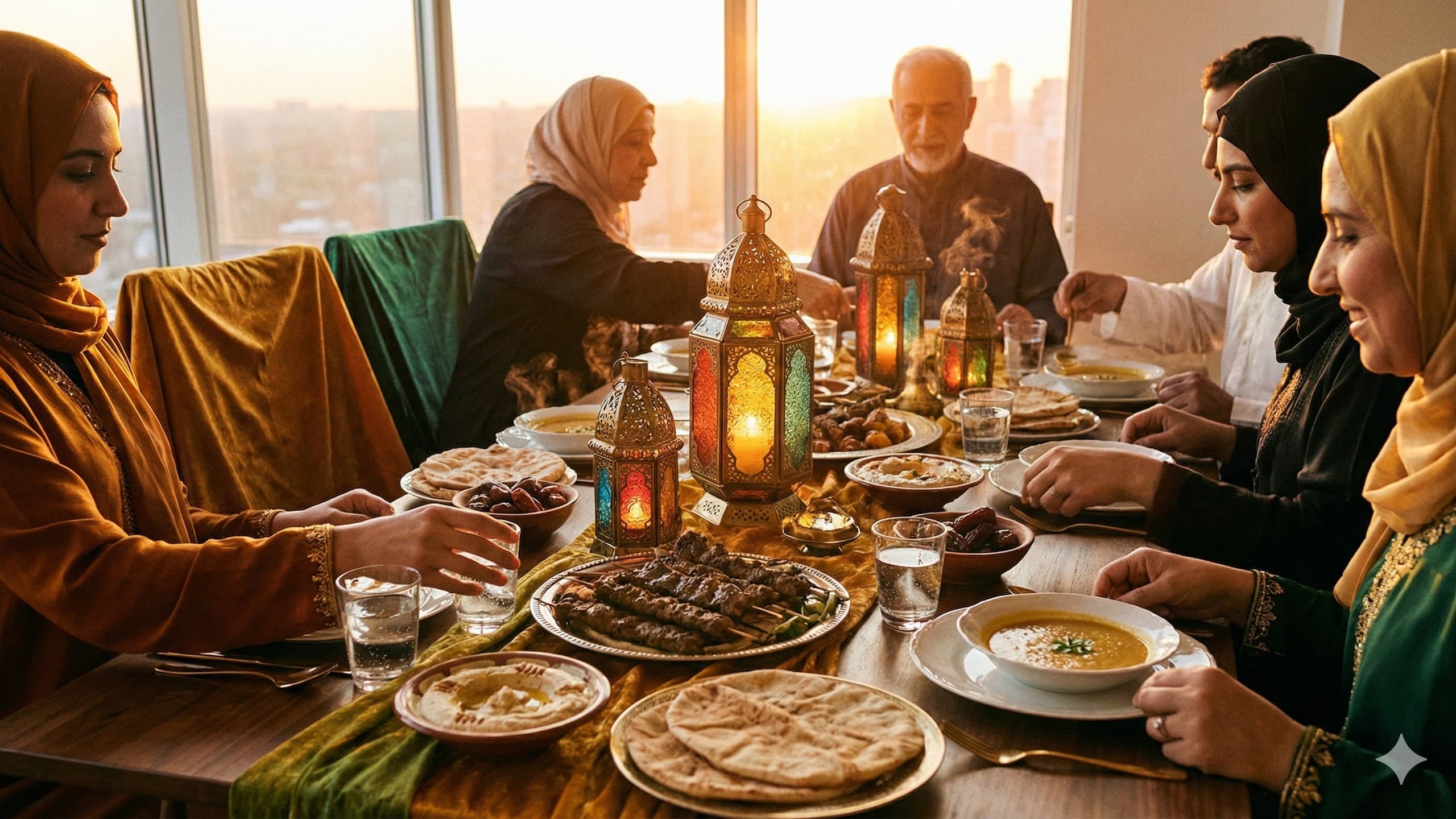
Eid is among the most joyous occasions in the Islamic calendar — a time of gratitude, generosity, community, and celebration. For the world's nearly two billion Muslims, the word "Eid" evokes memories of morning prayers with thousands gathered in open fields, the scent of perfume and incense, new clothes on excited children, lavish meals shared with family and neighbors, and the warmth of a community united in thankfulness.
There are two major Eid celebrations in Islam, each with distinct origins and traditions, yet both sharing the same spirit of joy and devotion. Whether you are planning an intimate family gathering or a large community festival for hundreds of guests, this guide will walk you through every aspect of organizing a meaningful, well-executed Eid celebration.
Understanding the Two Eids
EID AL-FITR: THE FESTIVAL OF BREAKING THE FAST
Eid al-Fitr falls on the first day of Shawwal, the month immediately following Ramadan. It marks the end of a month of fasting, prayer, and spiritual reflection. The celebration is one of gratitude — gratitude to Allah for the strength to complete the fast, and gratitude for the blessings of community and sustenance.
Key characteristics of Eid al-Fitr:
• It is actually prohibited to fast on this day, emphasizing the shift from Ramadan's discipline to Eid's celebration
• Zakat al-Fitr (a charitable donation of food or money) must be given before the Eid prayer, ensuring that everyone in the community can participate in the celebration
• The day begins with a special Eid prayer (Salat al-Eid), typically performed in a large congregation
• It is a day of feasting, visiting family and friends, and gift-giving
EID AL-ADHA: THE FESTIVAL OF SACRIFICE
Eid al-Adha falls on the 10th of Dhul Hijjah, the last month of the Islamic calendar, coinciding with the annual Hajj pilgrimage. It commemorates the willingness of Prophet Ibrahim (Abraham, peace be upon him) to sacrifice his son in obedience to God's command, and God's mercy in providing a ram as a substitute.
Key characteristics of Eid al-Adha:
• The Qurbani (animal sacrifice) is performed after the Eid prayer, following Ibrahim's example of devotion
• The meat from the Qurbani is traditionally divided into three parts: one-third for the family, one-third for relatives and friends, and one-third for those in need
• It is celebrated over two to three days (some scholars say four)
• It coincides with the Hajj pilgrimage — even those not performing Hajj participate in the global celebration
Understanding which Eid you are planning for will shape your celebration, though many elements — the prayer, the gatherings, the joy — are common to both.
The Morning of Eid: Traditions and Rituals
The day of Eid follows a beautiful sequence of traditions that have been observed for over 1,400 years.
BEFORE THE EID PRAYER
• Ghusl (ritual bath): Muslims perform a full bath before Eid prayer as an act of purification and preparation.
• New or best clothes: Wearing new clothes on Eid is a beloved Sunnah (practice of the Prophet). Children especially look forward to this tradition. Many families shop for Eid outfits in the weeks leading up to the day.
• Perfume and grooming: Applying attar (perfume) and grooming carefully is part of the preparation.
• Eating before Eid al-Fitr prayer: It is Sunnah to eat an odd number of dates before going to the Eid al-Fitr prayer, symbolizing that the fast of Ramadan has ended. For Eid al-Adha, however, the tradition is to eat after the prayer, beginning with meat from the Qurbani.
• Takbeer: From the night before through the morning, Muslims recite the Takbeer — "Allahu Akbar, Allahu Akbar, La ilaha illallahu, Allahu Akbar, Allahu Akbar, wa lillahil hamd" — filling homes and streets with this declaration of God's greatness.
THE EID PRAYER
The Eid prayer is typically held in a large open space (Eidgah) or a mosque, with the entire community — men, women, and children — gathering together. It is one of the most visually stunning communal experiences: rows upon rows of worshippers, sometimes numbering in the tens of thousands, standing shoulder to shoulder in prayer. After the prayer, the imam delivers a khutbah (sermon), and then the congregation disperses with hugs, handshakes, and the greeting "Eid Mubarak!" (Blessed Eid).
Planning Large Eid Gatherings
Eid gatherings are often large by nature. Muslim families tend to be extended and close-knit, and the tradition of visiting multiple households on Eid means that any single gathering might welcome 50, 100, or even 200 or more guests throughout the day. Planning for this scale requires forethought.
GUEST LIST AND INVITATIONS
• Think in terms of families, not individuals. Eid is a family celebration. When you invite one member of a family, the expectation is often that the entire household is welcome.
• Expect an open-door element. In many Muslim cultures, Eid has a semi-open-house quality. Neighbors, acquaintances, and even unexpected guests may stop by to offer Eid greetings. Plan for 10-20% more guests than your confirmed list.
• Send invitations early. Because many families visit multiple homes on Eid, sending invitations 2-3 weeks ahead helps guests plan their day.
• Use bilingual invitations. If your community includes Arabic speakers, having invitations in both Arabic and English (or another local language) shows thoughtfulness and respect.
Eventifia is designed with exactly these dynamics in mind. Its household grouping feature allows you to invite entire families as a unit — when you send an invitation to the Al-Rahman family, every member sees the invitation and the family responds together. The platform also supports full Arabic RTL (right-to-left) invitations, ensuring that Arabic text displays beautifully and correctly.
VENUE CONSIDERATIONS
• Home gatherings: The most traditional setting. Clear furniture to create open floor space for large groups. Set up a buffet area and separate seating zones for adults and children.
• Community halls or banquet spaces: Essential for larger celebrations. Look for venues that allow you to bring your own food (important for halal compliance) and that have a suitable area for prayer.
• Outdoor spaces: Parks and gardens work beautifully for Eid gatherings, especially in pleasant weather. Ensure access to shade, restrooms, and power if needed.
• Mosque community rooms: Many mosques host Eid celebrations in their community halls, providing a natural gathering point after the Eid prayer.
Traditional Eid Foods Across Cultures
The Muslim world spans every continent, and Eid tables reflect this magnificent diversity. Here are beloved Eid dishes from various cultural traditions.
ARABIC EID TRADITIONS
• Maamoul: Date or nut-filled shortbread cookies, intricately patterned with wooden molds. These are the quintessential Eid al-Fitr sweet in the Arab world.
• Kahk: Egyptian butter cookies coated in powdered sugar, filled with dates, nuts, or Turkish delight.
• Kabsa: A fragrant rice dish with spiced meat (lamb or chicken), popular in the Gulf region, especially for Eid al-Adha.
• Harees: A porridge of wheat and slow-cooked meat, traditional in Gulf countries.
• Kunafa and Baklava: Elaborate pastries served at celebrations.
TURKISH EID TRADITIONS
In Turkey, Eid al-Fitr is called "Seker Bayrami" (Sugar Festival), which gives a sense of the celebration's sweetness.
• Turkish Delight (Lokum) and Baklava are the stars of the Eid table
• Borek and Pogaca (savory pastries) are served to guests
• Turkish coffee is offered to every visitor, accompanied by sweets
• For Eid al-Adha (Kurban Bayrami), lamb dishes dominate — kavurma (sauteed meat), kebabs, and slow-roasted lamb
SOUTH ASIAN EID TRADITIONS
• Sheer Khurma: A rich vermicelli pudding made with milk, dates, and nuts — the most iconic Eid al-Fitr breakfast in South Asia.
• Biryani: Fragrant layered rice and meat, the centerpiece of many Eid feasts.
• Nihari: A slow-cooked meat stew, traditionally eaten at celebrations.
• Seekh Kebabs and Chapli Kebabs for Eid al-Adha
• Gulab Jamun, Rasmalai, and Kheer for dessert
NORTH AFRICAN EID TRADITIONS
• Couscous with Lamb: The iconic North African dish, prepared with special care for Eid.
• Mechoui: Whole roasted lamb, a centerpiece of Eid al-Adha in the Maghreb region.
• Makrout: Date-filled semolina cookies fried and dipped in honey.
• Mint Tea: Served ceremonially with generous hospitality.
INDONESIAN AND MALAYSIAN EID TRADITIONS
Indonesia has the world's largest Muslim population, and Eid al-Fitr (called "Lebaran" or "Hari Raya Aidilfitri") is the biggest holiday of the year.
• Ketupat: Compressed rice cakes cooked in woven palm leaf packets.
• Rendang: A deeply spiced, slow-cooked dry beef curry.
• Opor Ayam: Chicken in coconut milk.
• Nastar and Kue Lapis: Pineapple tarts and layered cakes prepared weeks in advance.
Children's Activities and Eid Gifts
Children are at the heart of Eid celebrations. For many Muslim children, Eid morning brings an excitement comparable to other cultural gift-giving traditions.
EIDI (EID GIFTS AND MONEY)
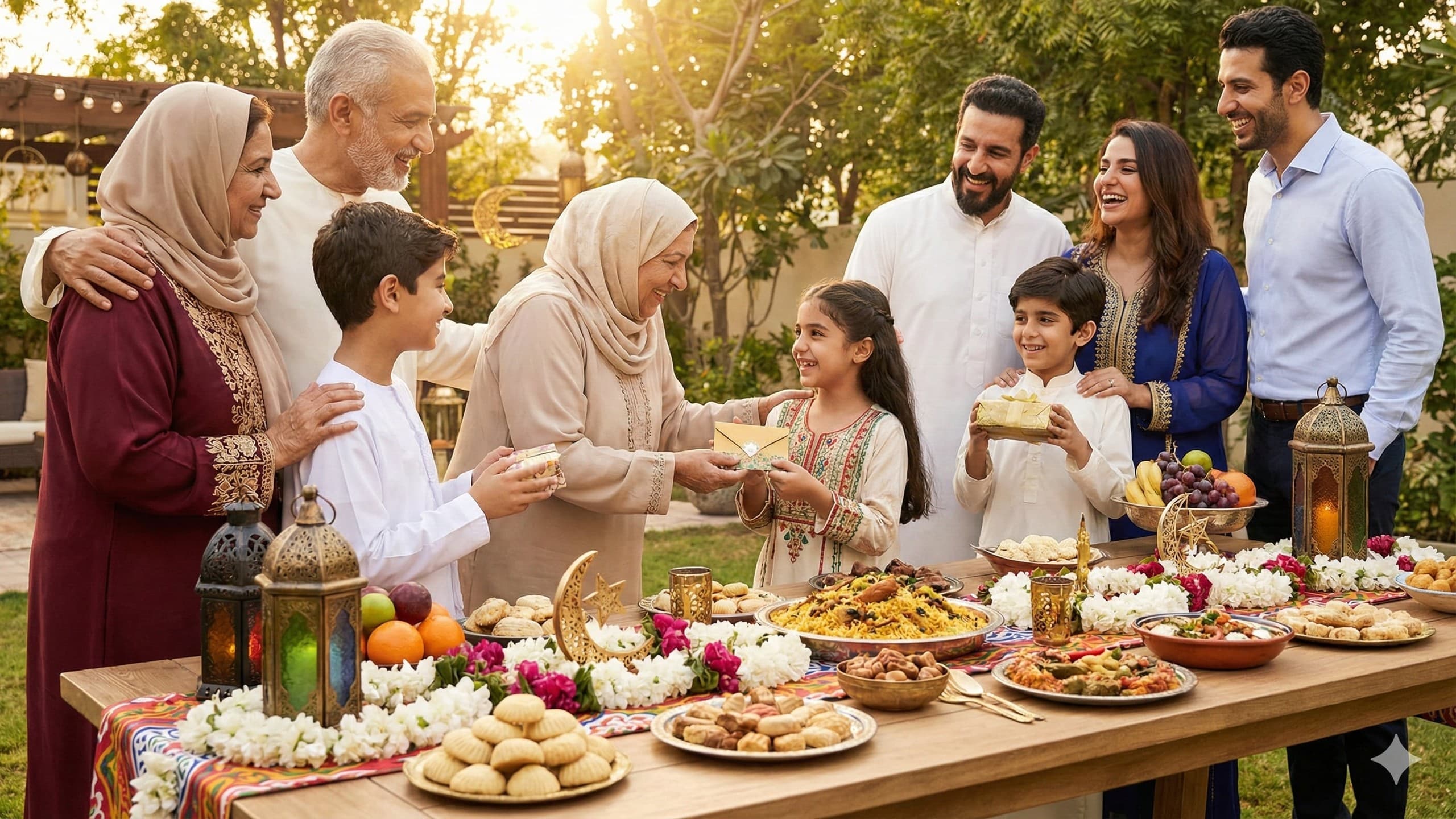
The tradition of giving Eidi — usually cash in decorated envelopes — to children (and often younger relatives regardless of age) is widespread across Muslim cultures. When planning your gathering:
• Have decorated Eidi envelopes prepared in advance
• Some families also give wrapped gifts or toys
• Community events might include small goodie bags for all children
CHILDREN'S ACTIVITIES AT EID GATHERINGS
• Eid-themed craft stations (making crescent moon decorations, decorating Eidi envelopes)
• Face painting with henna designs
• Bouncy castles or outdoor play equipment for large gatherings
• Eid scavenger hunts
• A designated play area with supervision, allowing parents to socialize
Decorations: Festive and Meaningful
Eid decorations have become increasingly popular and widely available, blending traditional Islamic aesthetics with festive celebration.
CLASSIC EID DECOR ELEMENTS
• "Eid Mubarak" banners and signs — available in Arabic calligraphy and English
• Crescent moon and star motifs — balloons, garlands, and table decorations
• Islamic geometric patterns — used in table runners, plates, and napkins
• Lanterns — a symbol of light and guidance, available in many styles
• Gold, green, and white color schemes — these are commonly associated with Eid, though there are no strict rules
• Fresh flowers — roses and jasmine are especially loved
• A beautifully arranged sweet table — this serves as both decor and hospitality
TABLE SETTING IDEAS
• Use a dedicated sweets table as a decorative centerpiece
• Arrange dates, dried fruits, and nuts in ornate bowls
• Incorporate Arabic calligraphy cards as place settings or labels
• Use brass or copper serving dishes for an elegant, traditional feel
Community Outreach and Charity
Eid is inseparable from charity. Before Eid al-Fitr, every Muslim who has the means is required to give Zakat al-Fitr — a specified amount of food or money — to ensure that those less fortunate can also celebrate. During Eid al-Adha, the distribution of Qurbani meat to the poor is a fundamental part of the celebration.
When planning community Eid events, consider:
• Organizing a Zakat al-Fitr collection point where community members can contribute
• Inviting refugees, newcomers, and those far from family — Eid can be lonely for those away from home
• Partnering with local food banks to distribute Eid meals to those in need
• Including a charity element in your celebration — some communities collect donations for specific causes during their Eid gatherings
Planning Timeline for Eid Gatherings
3-4 WEEKS BEFORE EID
• Determine the likely date of Eid (based on moon sighting predictions, though the exact date is confirmed only a day or two before)
• Decide on your gathering format and guest list
• Book a venue if hosting outside your home
• Begin sending invitations with the caveat that the exact date depends on the moon sighting
2 WEEKS BEFORE EID
• Plan and finalize your menu
• Begin ordering any specialty ingredients
• Purchase or prepare Eidi envelopes and children's gifts
• Arrange decorations
1 WEEK BEFORE EID
• Begin advance food preparation (many Eid dishes freeze well)
• Confirm RSVPs and adjust food quantities
• Shop for new Eid outfits if following this tradition
• Clean and prepare your home or venue space
1-2 DAYS BEFORE EID (MOON SIGHTING CONFIRMATION)
• The date is confirmed by moon sighting. Finalize all plans.
• Complete final cooking and food preparation
• Set up decorations
• Prepare the Eidi envelopes
• Ensure Zakat al-Fitr has been given
DAY OF EID
• Attend the Eid prayer with your family
• Return home and welcome guests
• Serve the feast and distribute Eidi
• Enjoy the day of celebration, gratitude, and togetherness
Practical Checklist for Eid Gatherings
☐ Determine Eid date based on moon sighting and plan accordingly
☐ Prepare guest list using household/family units
☐ Send bilingual invitations 2-3 weeks before Eid
☐ Ensure all food is halal and accommodates any dietary needs
☐ Prepare Eidi envelopes and gifts for children
☐ Fulfill Zakat al-Fitr obligation (for Eid al-Fitr)
☐ Arrange Qurbani (for Eid al-Adha) and plan meat distribution
☐ Plan decorations (crescent and star motifs, banners, lanterns)
☐ Designate a prayer area at the venue if applicable
☐ Prepare children's activities and play area
☐ Plan for 10-20% more guests than your confirmed list
☐ Arrange seating and buffet setup to accommodate large numbers
☐ Prepare a sweets and dates display table
☐ Confirm venue logistics (parking, restrooms, kitchen access)
Making Eid Celebrations Inclusive
If you are hosting an Eid celebration that includes non-Muslim friends, colleagues, or neighbors — as many families joyfully do — a few thoughtful touches make everyone feel welcome:
• Include a brief explanation of Eid's significance in your invitation
• Explain the greeting "Eid Mubarak" and encourage everyone to use it
• Describe any customs guests might observe (removing shoes, the flow of the celebration)
• Make it clear that all are welcome to eat, enjoy, and celebrate — participation in prayer is neither expected nor required
• Answer questions warmly and openly
Honoring Tradition, Embracing Community
Eid is a celebration that radiates outward — from the individual's gratitude, to the family's joy, to the community's togetherness, to charity that reaches those in need. When you plan an Eid gathering, you are participating in a tradition of hospitality and generosity that stretches back to the earliest days of Islam.
Whether your gathering is for twenty family members around a table of biryani and sheer khurma, or two hundred community members in a decorated hall, the essence remains the same: gratitude, generosity, and the joy of celebrating together.
Ready to plan your Eid celebration? Eventifia helps you manage every detail — from bilingual Arabic-English invitations with full RTL support, to household grouping that honors family-centered Eid traditions, to multi-day event support for celebrations that span Eid and the days of Tashreeq. Visit eventifia.com to bring your community together this Eid.