Planning a Baptism or Christening Reception: A Family Guide
Plan a meaningful baptism or christening reception with our family guide covering ceremony details, venue, food, decor, and guest management tips.
February 24, 20269 min read
Introduction
A baptism or christening is one of the first major milestones in a child's life — a sacred moment where family, faith, and community converge to welcome a new soul into the spiritual family. For parents, it is a day of profound gratitude and commitment. For grandparents, it is often a deeply emotional continuation of family tradition. For godparents, it marks the beginning of a lifelong spiritual responsibility. And for the gathered community, it is a celebration of new life and the enduring bonds of faith.
Whether you are planning a Catholic baptism followed by a brunch for 80 guests, a Protestant christening with an intimate garden reception for 30, or an Orthodox baptism celebration that honors centuries-old traditions, this guide will help you plan both the ceremony and the reception with care, meaning, and joy.
Understanding Baptism Across Christian Traditions
Baptism holds deep significance across all Christian denominations, but the specific practices, theology, and expectations vary. Understanding these differences is important for planning a celebration that respects your family's faith tradition.
CATHOLIC BAPTISM
In the Catholic Church, baptism is one of the seven sacraments and is typically performed in infancy, though adults seeking to enter the faith also receive baptism through the Rite of Christian Initiation of Adults (RCIA).
Key elements:
• The sacrament is usually performed during a scheduled baptism ceremony at the family's parish, often on a Sunday after Mass or at a designated time.
• The priest or deacon pours water over the child's head three times while invoking the Holy Trinity.
• Parents and godparents make promises to raise the child in the Catholic faith.
• The child is anointed with the oil of chrism.
• A white garment (baptismal gown) is placed on the child, symbolizing new life in Christ.
• A baptismal candle is lit from the Paschal candle.
• Catholic parishes typically require parents to complete a baptismal preparation class before the ceremony.
Godparent requirements: At least one godparent must be a confirmed, practicing Catholic. A second godparent from another Christian denomination may serve as a "Christian witness."
PROTESTANT CHRISTENING
Many Protestant denominations (Anglican, Lutheran, Methodist, Presbyterian, and others) practice infant baptism, often referred to as "christening." Practices vary significantly by denomination.
Key elements:
• The ceremony usually takes place during a regular Sunday worship service, making the entire congregation witnesses and participants.
• Water is sprinkled or poured on the child's forehead.
• Parents and godparents (or sponsors) make vows regarding the child's Christian upbringing.
• Some traditions include the presentation of a baptismal certificate and candle.
Notable variation: Baptist churches and many evangelical denominations practice "believer's baptism" — baptism only upon a person's conscious profession of faith, typically through full immersion. In these traditions, infant "dedication" ceremonies serve a similar celebratory purpose without the sacrament of baptism, and parents may plan a reception after a dedication as well.
ORTHODOX BAPTISM
Eastern Orthodox, Greek Orthodox, Russian Orthodox, and other Orthodox traditions have some of the most elaborate baptismal ceremonies in Christianity.
Key elements:
• The child is fully immersed in water three times (this is a defining feature of Orthodox baptism).
• The sacrament of Chrismation (anointing with holy oil) immediately follows baptism.
• The child receives their first Holy Communion immediately after Chrismation.
• The ceremony is rich with symbolism: exorcism prayers, the blessing of water, the cutting of hair (as an offering to God), and the procession around the baptismal font.
• The ceremony is typically longer and more elaborate than in Western traditions, often lasting 45-90 minutes.
Godparent significance: In Orthodox tradition, the godparent (Nono/Nona in Greek, Kum/Kuma in Serbian) plays a particularly significant role, often holding the child during the ceremony and being considered a spiritual co-parent. It is a deeply honored responsibility.
ANGLICAN/CHURCH OF ENGLAND CHRISTENING
The Church of England's christening service combines baptism with the naming of the child and the appointment of godparents.
Key elements:
• Typically held during a Sunday service or at a separate christening service.
• The priest makes the sign of the cross on the child's forehead.
• Water is poured over the child's head.
• Godparents (minimum of three — two of the same gender as the child and one of the opposite) make promises on behalf of the child.
• A baptismal candle is given.
Planning Timeline: 2-4 Months Ahead
3-4 MONTHS BEFORE
• Contact your church or parish. Discuss available dates and any preparation requirements (baptismal preparation classes, documentation, scheduling with the priest or pastor).
• Select godparents. This is a deeply personal and spiritually significant choice. Discuss the role's meaning and responsibilities with potential godparents before asking.
• Set the reception date and time. The reception typically follows immediately after the ceremony — if the baptism is at 11 AM, plan a lunchtime reception; if at 2 PM, plan an afternoon tea or early dinner.
• Begin planning the guest list. Baptism receptions typically include family (often extended), godparents, close friends, and sometimes members of the church community.
2 MONTHS BEFORE
• Book the reception venue (if not hosting at home).
• Send invitations. Include the ceremony time and location, the reception time and location, and any relevant details (dress code, parking, whether children are welcome — they typically are, as this is a family-centered event).
• Plan the menu and book the caterer if using one.
• Order or select the baptismal gown. Many families use heirloom gowns passed down through generations. If purchasing new, white or ivory is traditional.
• Choose the cake — baptism cakes often feature religious symbols (cross, dove, lamb, angel) and are typically white or pastel.
1 MONTH BEFORE
• Confirm RSVPs and finalize headcount.
• Plan decorations.
• Arrange photography (check church rules about photography during the ceremony — many churches have restrictions).
• Purchase or prepare party favors if desired.
• Coordinate with godparents on any ceremony roles or gifts.
1 WEEK BEFORE
• Confirm all bookings (venue, caterer, photographer, cake).
• Prepare any ceremony items (baptismal gown pressed and ready, candle, white shawl).
• Finalize the seating arrangement if applicable.
• Prepare a thank-you speech (a brief word from the parents during the reception is customary).
Ceremony Considerations
COORDINATING WITH YOUR CHURCH
Every church and parish has its own procedures for baptism. Key questions to ask:
• What dates and times are available for baptisms?
• Is a baptismal preparation course required? How long is it?
• What documentation is needed (birth certificate, parents' marriage certificate, godparents' confirmation certificates)?
• Can the ceremony be held during regular worship or at a private time?
• Are there restrictions on photography, videography, or flash during the ceremony?
• Can we bring our own flowers or decorations for the church?
• How long does the ceremony typically last?
• Are there any items we need to provide (candle, gown, towel)?
GODPARENT SELECTION
Choosing godparents is one of the most meaningful decisions in the baptism planning process. Depending on your denomination:
• Catholic tradition: Requires at least one godparent who is a confirmed, practicing Catholic in good standing. The godparent's role is to assist the parents in the child's Catholic upbringing.
• Orthodox tradition: The godparent (often a single primary sponsor) plays a central role in the ceremony and is considered a spiritual parent. The relationship carries serious, lifelong significance.
• Protestant traditions: Requirements vary. Some denominations require godparents to be baptized Christians; others are more flexible.
• Across all traditions: Choose someone whose faith, character, and relationship with your family you trust deeply. This is a spiritual commitment, not an honorary title.
WHAT TO EXPECT DURING THE CEREMONY
Preparing guests — especially those unfamiliar with your denomination's practices — helps everyone feel comfortable. Consider including a brief note in your invitation or a small printed program for the ceremony that explains:
• The order of the service
• When to stand, sit, or respond (if applicable)
• The meaning of each ritual element
• Photography guidelines
Reception Planning
VENUE OPTIONS
At Home: The most intimate and personal option. Ideal for smaller gatherings (20-50 guests). The warmth of a home setting aligns beautifully with the family-centered nature of the occasion. Consider your yard or garden for spring and summer baptisms.
Restaurant Private Room: A convenient option that eliminates the stress of cooking and setup. Many restaurants offer private dining rooms suitable for 20-60 guests. Confirm that the space can accommodate children comfortably.
Garden or Outdoor Venue: A beautiful choice for spring and summer baptisms. Ensure you have a weather contingency plan (tent or indoor backup). Gardens offer a natural, serene atmosphere that complements the spiritual tone of the day.
Church Fellowship Hall: A practical and meaningful choice — the celebration takes place in the same community where the sacrament was received. Church halls are typically affordable (often free for members) and conveniently located right after the ceremony.
Banquet Hall or Event Space: For larger celebrations (80+ guests), a dedicated event space provides ample room, catering capabilities, and flexibility for decorations and programming.
TIMING: BRUNCH, LUNCH, OR AFTERNOON TEA
The reception timing typically depends on when the ceremony is scheduled:
• Morning ceremony (9-11 AM): Brunch reception. This is one of the most popular formats — fresh, light, and perfectly timed.
• Late morning ceremony (11 AM-12 PM): Lunch reception. A seated or buffet lunch with a slightly more substantial menu.
• Afternoon ceremony (1-3 PM): Afternoon tea or cocktail reception. Lighter fare with tea sandwiches, scones, pastries, and beverages.
• Late afternoon ceremony (3-5 PM): Early dinner or cocktail reception.
When managing a baptism with both a ceremony and reception, keeping your guest list coordinated across both events is essential. Eventifia allows you to link the church ceremony and the reception as connected sub-events with a single shared guest list. Guests RSVP once and indicate which parts they will attend, while you see a unified view of your guest list with clear headcounts for each event.
Theme and Decor
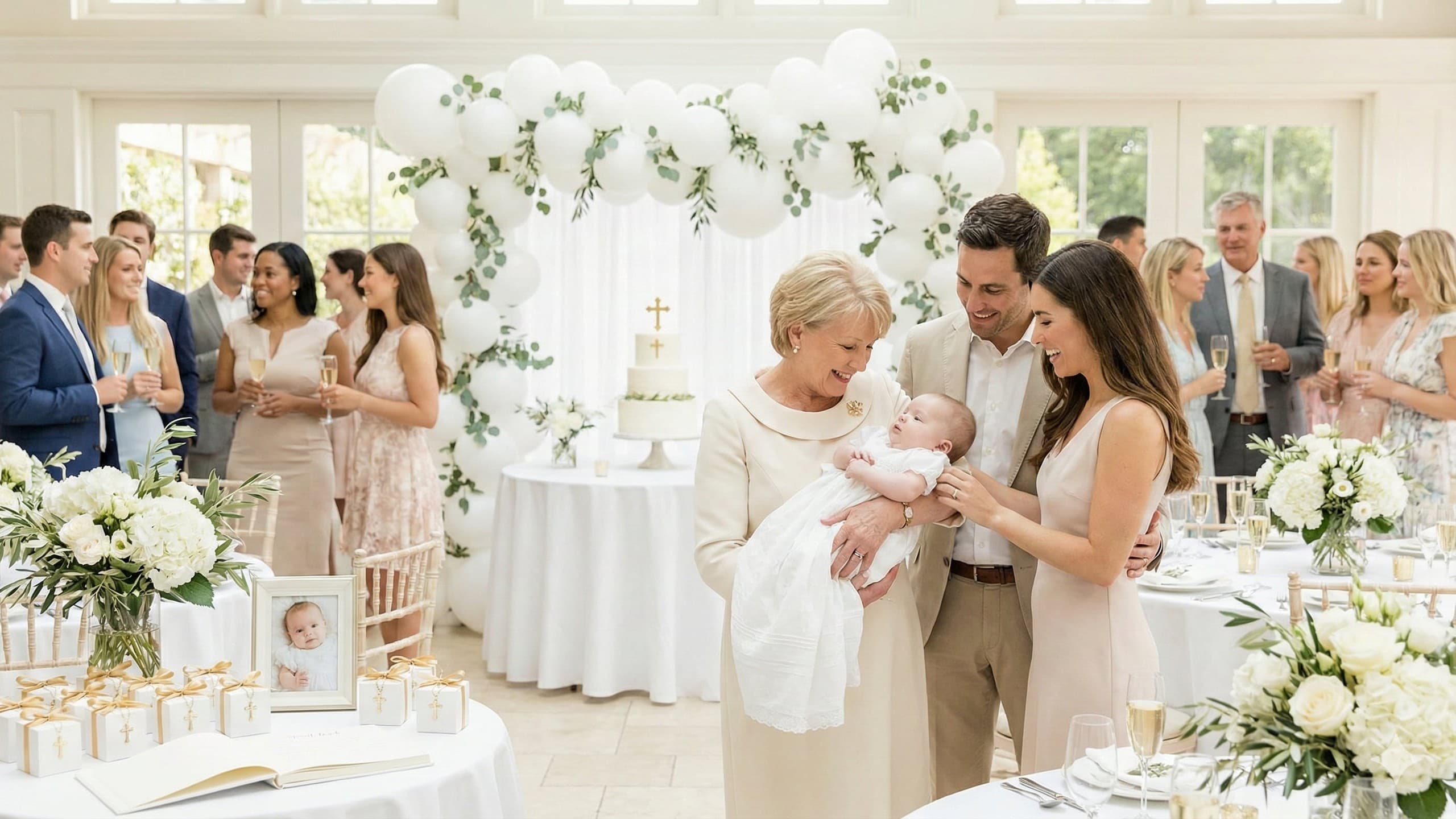
Baptism and christening receptions typically feature a soft, elegant aesthetic that reflects the spiritual significance of the occasion.
COLOR PALETTES
• Classic white and gold: Timeless, elegant, and universally appropriate
• White and blue: Traditional for boys, drawing from the color of baptismal water
• White and pink or blush: A popular choice for girls
• White and sage green: A natural, garden-inspired palette
• All white: Pure, simple, and stunning
• Soft pastels: Lavender, mint, peach, or sky blue paired with white
DECOR ELEMENTS
• Fresh white flowers: Roses, peonies, lilies, hydrangeas, or baby's breath. Keep arrangements soft and elegant.
• Religious symbols (used tastefully): Small crosses, doves, lamb figurines, or angel motifs as table accents — not overwhelming the space but present as gentle reminders of the occasion's meaning.
• Candles: White or cream candles in varying heights create a warm, sacred atmosphere. Votive candles scattered across tables are both beautiful and symbolic.
• The baptismal candle on display: Place the child's baptismal candle (lit or unlit) in a prominent position as a centerpiece.
• Photo displays: A table featuring the child's photos from birth to present, alongside baptismal photos of parents or grandparents, creates a meaningful family narrative.
• A guest book or blessing book: Instead of a traditional guest book, provide cards where guests can write a prayer, blessing, or wish for the child. These become treasured keepsakes.
BALLOONS, BANNERS, AND SIGNAGE
• A "God Bless [Child's Name]" banner is a classic choice
• Balloon arrangements in the chosen color palette add festivity
• A welcome sign at the entrance with the child's name and date
• Table numbers or place cards featuring a religious motif
Food Ideas
BRUNCH MENU (MOST POPULAR)
A baptism brunch strikes the perfect balance — celebratory without being heavy, and accommodating to guests of all ages.
Savory options:
• Quiche (Lorraine, spinach and feta, or mushroom)
• Smoked salmon with cream cheese and capers on toast points
• Mini frittatas or egg cups
• Croissant sandwiches (ham and cheese, chicken salad)
• Fresh fruit platter with seasonal berries
• Yogurt parfait station
Sweet options:
• Assorted pastries (croissants, Danish, muffins)
• French toast casserole or pancake station
• Scones with clotted cream and jam
Beverages:
• Mimosas or Bellinis for adults
• Coffee, tea, and juice
• A special sparkling cider or lemonade for all guests including children
LUNCH MENU
• Salad bar or pre-plated salads
• Grilled chicken, salmon, or pasta as main course
• Sandwich platters for a casual format
• Roasted vegetables and sides
AFTERNOON TEA MENU
• Finger sandwiches (cucumber, egg salad, smoked salmon)
• Scones with preserves
• Mini pastries and petit fours
• A selection of teas
THE CAKE
The baptism cake is a centerpiece of the reception.
Traditional styles:
• White frosted cake with a cross, dove, or angel topper
• Tiered cake decorated with fondant flowers and religious motifs
• Elegant simplicity — a beautifully iced cake with the child's name and date
Modern trends:
• Naked or semi-naked cakes with fresh flowers
• Macaron towers in the event's color palette
• A dessert table featuring the cake alongside cupcakes, cookies, and other sweets
• A smash cake for the baby (if old enough) alongside the main cake
Guest List Considerations
Baptism guest lists typically include:
• Immediate family: Parents, siblings, grandparents
• Godparents and their families
• Extended family: Aunts, uncles, cousins
• Close family friends
• Church community members (the priest or pastor, families from the congregation)
SIZE CONSIDERATIONS
• Intimate gathering (15-30 guests): Close family and godparents only. Best suited to a home reception or small restaurant.
• Medium gathering (30-60 guests): Extended family and close friends. Home, restaurant, or garden setting.
• Large celebration (60-120+ guests): Extended community. Requires a larger venue and more formal catering.
In some cultural traditions — particularly Italian, Greek, Latin American, and Filipino families — baptism celebrations are large, elaborate affairs comparable in scale to a wedding reception. This is a beautiful expression of the importance placed on the sacrament and the community's role in the child's spiritual life. Plan accordingly based on your family's tradition and expectations.
Photography Guidelines
DURING THE CEREMONY
• Check with your church first. Some churches prohibit photography during the sacrament, allow only a designated photographer (no guest phones), or restrict flash photography.
• Assign a professional photographer who understands church etiquette. They should be discreet, never blocking the altar or the priest, and should know where to stand.
• Key moments to capture: The pouring of water, the anointing, the white garment being placed, the lighting of the baptismal candle, the family at the font, the godparents holding the child.
DURING THE RECEPTION
• Formal group shots: Family with the baby, godparents with the baby, grandparents, and any important groupings.
• Candid moments: Guests interacting with the baby, the cake cutting, toasts, and general celebration.
• Detail shots: The cake, decorations, the baptismal gown, the candle, the guest book.
Gift Traditions
Baptism gifts often carry spiritual significance:
• A Bible or prayer book — sometimes inscribed with the child's name and baptism date
• A cross or crucifix — a necklace, wall cross, or decorative cross
• A silver or gold religious medal (depicting a patron saint, the Virgin Mary, or an angel)
• A keepsake box for baptismal mementos
• A savings bond or monetary gift for the child's future
• A personalized blanket, frame, or ornament marking the date
Godparents traditionally give a more significant gift, often a piece of jewelry with religious significance that the child will keep for life.
Thank-You Etiquette
• Send thank-you notes within two to three weeks of the ceremony.
• Personalize each note — mention the specific gift and how it will be meaningful.
• Include a photo of the child on the baptism day if possible.
• Thank the priest or pastor separately — a personal note of gratitude (and sometimes a monetary gift or donation to the parish) is customary.
• Acknowledge those who helped plan — family members who cooked, set up, or contributed to the celebration deserve recognition.
Practical Checklist
☐ Schedule the baptism with your church/parish
☐ Complete any required preparation courses
☐ Choose and invite godparents
☐ Set the reception date, time, and venue
☐ Plan and send invitations (include ceremony and reception details)
☐ Select or prepare the baptismal gown
☐ Plan the reception menu
☐ Order the cake
☐ Plan decorations
☐ Arrange photography (confirm church rules)
☐ Prepare a guest book or blessing book
☐ Coordinate with godparents on ceremony roles
☐ Prepare a brief thank-you speech for the reception
☐ Order party favors if desired
☐ Confirm all bookings one week before
☐ Prepare the baptismal candle and any ceremony items
☐ Write and send thank-you notes after the event
A Day of Grace and Gratitude
A baptism or christening is a day that families remember forever — the moment their child was welcomed into the community of faith, surrounded by those who will love and guide them. The reception that follows is not merely a party; it is a continuation of that sacred moment, a space where gratitude overflows into celebration and the community's love for the child is tangibly expressed through food, fellowship, and joy.
Plan every detail of your baptism celebration with Eventifia. Link the ceremony and reception as connected sub-events, manage your guest list with household grouping for family units, capture meal preferences and headcounts effortlessly, and send beautifully designed invitations in any of nine supported languages. Visit eventifia.com to start planning this milestone celebration for your family.