How to Organize a Community Cultural Festival: A Step-by-Step Guide
Plan a successful community cultural festival with our step-by-step guide covering permits, programming, vendors, volunteers, and budget management.
February 24, 202612 min read
Introduction
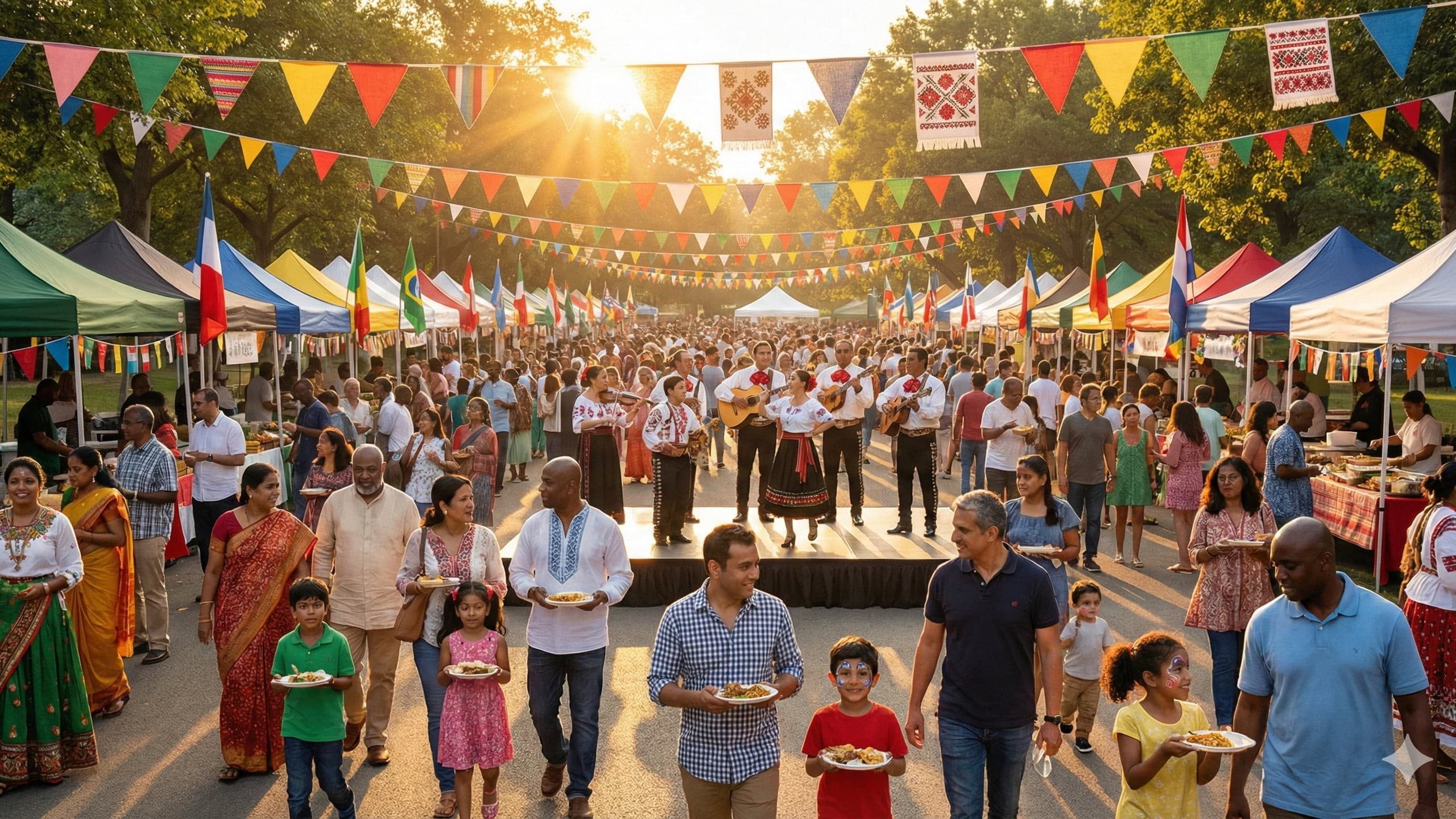
A community cultural festival is one of the most ambitious, rewarding, and impactful events a community can create. When done well, it becomes far more than a single day of entertainment — it becomes a catalyst for understanding, a platform for heritage, and a gathering place where neighbors who have never spoken discover that they share more than a zip code.
Cultural festivals celebrate the living traditions of a community: the music that has been passed down through generations, the food that carries the taste of homelands near and far, the dances that tell stories older than any building in town, the art that expresses identity and aspiration. They educate, entertain, and unite. They give voice to communities that are often invisible in mainstream cultural programming. They give children the chance to see their heritage celebrated publicly, with pride.
But organizing a cultural festival is a serious undertaking. It requires months of planning, a dedicated team, navigating legal requirements, managing budgets that may range from a few thousand dollars to six figures, and — above all — the cultural sensitivity to represent diverse traditions with authenticity and respect.
This guide will walk you through the entire process, from initial vision to post-festival evaluation.
Vision and Mission: Starting with Purpose
Before you book a venue, recruit a single volunteer, or contact a single performer, you need to answer a fundamental question: Why are we doing this?
DEFINING YOUR PURPOSE
Cultural festivals serve many purposes, and your specific goals will shape every decision that follows:
• Celebrating heritage: Showcasing the traditions, arts, and customs of one or more cultural communities within your area.
• Education and awareness: Introducing the broader community to cultures they may not know well, building understanding across lines of difference.
• Community building: Creating a shared experience that brings together people of diverse backgrounds around common values of curiosity, respect, and celebration.
• Economic development: Supporting local cultural entrepreneurs, artisans, and food vendors.
• Activism and visibility: Providing a platform for communities that are underrepresented or marginalized.
WRITING A MISSION STATEMENT
A clear mission statement guides your planning and helps you make decisions when resources are limited (they always are). Examples:
• "The Riverside Cultural Festival celebrates the rich traditions of the fifteen cultures represented in our community through music, food, art, and storytelling, fostering understanding and connection among all residents."
• "The Heritage Arts Festival showcases the traditional arts and crafts of our region's immigrant communities, supporting artisans and educating the public about the cultural traditions that enrich our city."
Forming the Organizing Committee
A cultural festival should not be organized by one person, and it should not be organized by a homogeneous group. The organizing committee should reflect the diversity of the communities the festival aims to celebrate.
COMMITTEE COMPOSITION
• Community representatives: Include members from each cultural group that will be featured. They serve as liaisons to their communities and as cultural advisors.
• Event management expertise: Someone with experience in logistics, permits, and vendor management.
• Financial management: A treasurer or finance lead who can manage the budget, track expenses, and handle sponsor funds.
• Marketing and communications: Someone skilled in outreach, social media, and community engagement.
• Volunteer coordinator: Managing potentially dozens or hundreds of volunteers requires a dedicated lead.
• Arts and programming coordinator: Someone with knowledge of performing and visual arts who can curate the program.
COMMITTEE GUIDELINES
• Establish clear roles and responsibilities from the first meeting.
• Set a regular meeting schedule (monthly initially, biweekly as the festival approaches, weekly in the final month).
• Use shared documents and communication tools to keep everyone informed.
• Make decisions collectively, especially decisions about cultural representation.
• Compensate committee members if budget allows — organizing a festival is significant labor.
Planning Timeline: 6-12 Months
12-9 MONTHS BEFORE
Foundation phase:
• Define the festival's vision, mission, and scope
• Form the organizing committee
• Choose a date (consider weather, competing events, and the cultural calendar — avoid scheduling on major religious holidays)
• Begin venue research and preliminary booking
• Develop a preliminary budget
• Begin researching legal requirements (permits, insurance)
• Identify potential sponsors and begin outreach
8-6 MONTHS BEFORE
Programming and logistics phase:
• Secure the venue
• Apply for necessary permits (see legal section below)
• Finalize the programming concept (which cultures, which art forms, which activities)
• Begin recruiting performers, workshop leaders, and food vendors
• Launch sponsorship campaigns
• Begin marketing and community outreach
• Open volunteer recruitment
5-3 MONTHS BEFORE
Confirmation and detail phase:
• Confirm all performers, vendors, and workshop leaders
• Finalize the festival schedule and site map
• Secure insurance
• Order rental equipment (stages, tents, tables, chairs, sound systems, generators)
• Launch public marketing campaign (social media, flyers, press releases, community newsletters)
• Develop the volunteer schedule and training plan
• Plan safety and accessibility measures
• Create printed materials (programs, maps, signage)
2-1 MONTHS BEFORE
Finalization phase:
• Confirm all logistics with vendors and performers
• Conduct a site walkthrough with key stakeholders
• Finalize the volunteer schedule and conduct training
• Complete all marketing pushes
• Prepare event-day materials (wristbands, signage, programs)
• Confirm emergency plans and safety procedures
• Brief all committee members on their event-day responsibilities
WEEK OF THE FESTIVAL
• Load-in and setup (typically begins 1-2 days before)
• Final walkthrough
• Volunteer check-in and last-minute briefing
• Stage and sound checks
• Vendor setup and inspection
Managing this complex timeline with a large team of organizers, performers, vendors, and volunteers requires robust coordination tools. Eventifia offers team permissions and attendee management features that allow you to assign roles to committee members, track registrations, manage vendor and performer communications, and monitor attendee numbers — all from a centralized platform.
Legal Requirements
Navigating the legal landscape is one of the least glamorous but most critical aspects of festival planning. Requirements vary significantly by location, so consult with local authorities early.
PERMITS AND LICENSES
• Event permit: Most municipalities require a special event permit for gatherings above a certain size. Apply early — some jurisdictions require 60-90 days' advance notice.
• Food vendor permits/licenses: Each food vendor may need a temporary food service permit from the local health department. Ensure compliance well before the event.
• Alcohol license: If your festival will serve alcohol, a temporary liquor license is typically required. These have specific rules about serving areas, hours, and age verification. Some cultural festivals choose to be alcohol-free for cultural or practical reasons.
• Music/noise permits: If your festival involves amplified music, check local noise ordinances and obtain any necessary permits. Be mindful of surrounding residents.
• Fire permits: If your event involves open flames, cooking outdoors, or fire performances, fire department approval may be needed.
• Street closure permits: If the festival occupies public streets, coordinate with transportation and public works departments.
INSURANCE
• General liability insurance: Essential for any public event. This protects you against claims of injury or property damage. Typical coverage ranges from $1 million to $5 million.
• Vendor insurance: Require each vendor (food and retail) to carry their own liability insurance and name your organization as an additional insured.
• Cancellation insurance: Protects your investment if the festival must be cancelled due to weather or other unforeseen circumstances.
HEALTH DEPARTMENT REQUIREMENTS
• All food vendors must comply with local food safety regulations
• Temporary food permits or inspections may be required
• Handwashing stations must be available for food handlers
• Temperature control for food storage and service must meet health codes
• The health department may inspect during the festival
Venue Selection
The venue sets the physical parameters of your festival and profoundly influences the guest experience.
VENUE OPTIONS
Public Parks: Pros: Large open spaces, natural beauty, often affordable (especially for community organizations), parking availability. Cons: Weather dependency, limited electrical infrastructure, permit requirements, park rules and restrictions.
Community Centers: Pros: Indoor option eliminates weather concerns, built-in facilities (restrooms, kitchen, parking), accessible. Cons: Size limitations, less "festival" atmosphere, may limit outdoor activities.
City Streets (Street Festival): Pros: High visibility, embedded in the community, natural foot traffic, strong festival atmosphere. Cons: Street closure logistics, limited space for staging, noise impact on nearby businesses and residents, traffic management.
Fairgrounds or Exhibition Centers: Pros: Purpose-built for events, large capacity, infrastructure (electricity, water, staging). Cons: Cost, may be outside the community center, less intimate.
School Grounds (with permission): Pros: Community-centered, parking, open space. Cons: Scheduling limitations, school district approval process, liability considerations.
VENUE ASSESSMENT CRITERIA
• Capacity (can it accommodate your expected attendance?)
• Accessibility (ADA compliance, public transit access, parking)
• Infrastructure (power, water, restrooms, staging areas)
• Cost (rental fees, required services)
• Layout flexibility (can you create distinct zones for different activities?)
• Weather contingency (covered areas, indoor backup)
• Proximity to your target community
Programming: The Heart of the Festival
Programming is where your mission comes to life. A well-curated program balances education and entertainment, tradition and accessibility, depth and breadth.
PERFORMANCE PROGRAMMING
• Music: Traditional music from represented cultures, fusion performances, community choirs or ensembles. Include a mix of high-energy performances and quieter, more reflective pieces.
• Dance: Traditional dance performances (folk dance, classical dance, ceremonial dance). Consider whether audience participation is appropriate for each type.
• Theater and storytelling: Short theatrical pieces, puppet shows, or storytelling sessions that share cultural narratives.
• Martial arts demonstrations: Tai chi, capoeira, kendo, and other cultural martial arts as performance art.
Stage management tips:
• Create a detailed stage schedule with setup and teardown time between acts
• Provide a sound technician who can adjust for very different performance requirements
• Ensure a backstage area where performers can prepare
• Have an emcee who can provide context between performances and keep the audience engaged during transitions
WORKSHOP PROGRAMMING
Interactive workshops deepen engagement beyond passive watching:
• Cooking demonstrations (specific dishes from represented cultures)
• Craft workshops (origami, henna application, calligraphy, pottery, weaving)
• Language mini-lessons ("Learn 10 words in Arabic/Mandarin/Swahili")
• Dance workshops (learn basic steps of salsa, dabke, bhangra)
• Music workshops (drum circles, instrument demonstrations)
FOOD PROGRAMMING
For many attendees, the food is the main attraction. Cultural food at a festival should be authentic, not watered-down or "adapted for Western palates."
• Recruit vendors from within the cultural communities being represented. This ensures authenticity and supports community entrepreneurs.
• Offer a diverse range: street food, desserts, beverages, and specialty items.
• Include a food guide with descriptions of each dish, its cultural significance, and allergen information.
• Consider dietary diversity: ensure halal, kosher, vegetarian, vegan, and gluten-free options are available across vendors (not concentrated at one stall).
ART AND EXHIBITION PROGRAMMING
• Gallery-style displays of visual art from community artists
• Live art demonstrations (painting, sculpture, textile arts)
• Photo exhibitions documenting the community's cultural heritage
• Historical displays created in partnership with cultural organizations or museums
CHILDREN'S ACTIVITIES
Families are often the core audience of cultural festivals. A robust children's program is essential:
• Craft stations (mask-making, instrument-building, flag-painting)
• Storytelling tent with tales from different cultures
• Scavenger hunt that takes children to each cultural area of the festival
• Face painting with culturally inspired designs
• A dedicated performance area for children's acts (puppet shows, magic, children's dance groups)
Vendor and Performer Recruitment
FINDING PERFORMERS
• Contact cultural organizations, community centers, and places of worship within represented communities
• Reach out to university cultural clubs and international student organizations
• Attend other cultural events and festivals to discover performers
• Post calls for performers through community networks, social media, and cultural media outlets
• Partner with arts councils or cultural affairs offices
VENDOR RECRUITMENT
• Recruit food vendors from within the cultural communities being represented
• Contact retail artisans who create traditional crafts, clothing, or art
• Reach out to cultural nonprofits for informational booths
• Ensure a mix of food, retail, and informational vendors
CONTRACTS AND AGREEMENTS
• Every performer and vendor should have a written agreement specifying: - Date, time, and duration of their participation - Space allocation and setup requirements - Equipment provided vs. equipment they must bring - Compensation (fee, percentage of sales, or volunteer basis) - Insurance requirements - Cancellation terms
Sponsorship and Fundraising
SPONSORSHIP TIERS
Create sponsorship packages that offer value to sponsors while funding the festival:
Tier: Title Sponsor | Contribution: $10,000+ | Benefits: Name in festival title, logo on all materials, main stage naming, booth space, VIP access
Tier: Gold Sponsor | Contribution: $5,000-$9,999 | Benefits: Logo on materials, banner placement, booth space, social media recognition
Tier: Silver Sponsor | Contribution: $2,000-$4,999 | Benefits: Logo on program, social media mentions, recognition at event
Tier: Bronze Sponsor | Contribution: $500-$1,999 | Benefits: Name in program, social media mention
Tier: In-Kind Sponsor | Contribution: Variable | Benefits: Recognition based on value of contribution (equipment, food, services)
ADDITIONAL REVENUE SOURCES
• Vendor booth fees (typically $100-$500 per vendor)
• Ticket sales or suggested donations (many cultural festivals are free, funded by sponsors and grants)
• Grant funding (arts councils, cultural foundations, government cultural programs)
• Merchandise sales (festival t-shirts, commemorative items)
• Food and beverage sales (if operated by the festival organization rather than independent vendors)
BUDGET RANGES
• Small community festival (500-1,000 attendees): $5,000-$15,000
• Mid-size festival (1,000-5,000 attendees): $15,000-$50,000
• Large festival (5,000-20,000 attendees): $50,000-$150,000
• Major festival (20,000+ attendees): $100,000+
SAMPLE BUDGET ALLOCATION
Category: Performer fees and entertainment | Percentage: 25-30%
Category: Venue and infrastructure (rental, tents, staging, equipment) | Percentage: 20-25%
Category: Marketing and promotion | Percentage: 10-15%
Category: Insurance and permits | Percentage: 5-10%
Category: Food and hospitality (for performers and volunteers) | Percentage: 5-10%
Category: Staffing and security | Percentage: 10-15%
Category: Printing and signage | Percentage: 3-5%
Category: Contingency | Percentage: 5-10%
Marketing and Outreach
REACHING DIVERSE COMMUNITY SEGMENTS
One of the unique challenges of marketing a multicultural festival is reaching audiences across language, media consumption, and community boundaries.
Multilingual marketing:
• Produce marketing materials in every language spoken by the communities you are representing
• Use community-specific media channels (ethnic newspapers, community radio stations, cultural social media groups)
• Recruit community ambassadors from each cultural group who can spread the word through their own networks
Digital marketing:
• Social media campaigns with content featuring performers, food vendors, and cultural highlights
• A festival website with program details, vendor list, map, and accessibility information
• Email marketing to community organization mailing lists
• Partner with local influencers and cultural bloggers
Community outreach:
• Post flyers at cultural centers, places of worship, ethnic grocery stores, and community bulletin boards
• Present at community organization meetings
• Partner with schools to distribute information to families
• Coordinate with city cultural affairs offices for cross-promotion
Press outreach:
• Send press releases to local newspapers, TV stations, and online media
• Invite food and culture journalists for a preview or early access
• Offer interview opportunities with performers and cultural leaders
Volunteer Management
A cultural festival depends on volunteers. A festival serving 5,000 attendees might need 50-100 volunteers across the day.
VOLUNTEER ROLES
• Setup and teardown crew: Physical work before and after the event
• Information booth staff: Answering questions, distributing programs, providing directions
• Stage crew: Assisting performers, managing equipment transitions
• Children's area monitors: Supervising activities and ensuring safety
• Food area coordinators: Managing vendor logistics and waste stations
• Parking and traffic: Directing vehicles and pedestrians
• First aid and safety: Stationed at first aid posts (trained volunteers or professionals)
• Cleanup crew: Ongoing waste management and post-event cleanup
• Photographer/videographer volunteers: Documenting the event for future promotion
VOLUNTEER MANAGEMENT BEST PRACTICES
• Recruit more volunteers than you think you need (assume 20-30% no-show rate)
• Conduct a volunteer orientation before the event (in person or virtual)
• Create clear shift schedules (4-hour shifts with breaks prevent burnout)
• Provide all volunteers with identifying shirts, badges, or lanyards
• Feed your volunteers — a well-fed volunteer is a happy volunteer
• Thank volunteers publicly and personally after the event
• Collect volunteer feedback for future improvement
Safety and Accessibility
SAFETY PLANNING
• First aid: Have a clearly marked first aid station staffed by qualified first aid providers. For large festivals, consider having EMTs on site.
• Emergency plan: Develop and distribute an emergency plan to all committee members and key volunteers. Include procedures for severe weather, medical emergencies, fire, and evacuation.
• Security: Depending on the size and nature of the event, hire professional security or coordinate with local law enforcement. Security should be visible but not intimidating.
• Crowd management: Plan for flow patterns, identify potential bottleneck areas, and station volunteers to manage crowd density.
• Weather contingency: Have a clear plan for severe weather. Know the nearest sheltered areas. Consider a weather monitoring service for real-time updates.
ACCESSIBILITY (ADA COMPLIANCE AND BEYOND)
An inclusive festival must be accessible to people of all abilities:
• Physical accessibility: Ensure pathways are wide enough for wheelchairs and mobility devices. Use firm, level ground surfaces (or lay temporary flooring over grass). Provide accessible restrooms.
• Sensory considerations: Designate a quiet zone for guests who need a sensory break. Provide sign language interpreters for main stage performances if possible.
• Visual accessibility: Use large, high-contrast signage. Provide program materials in large print.
• Financial accessibility: Consider free admission or a sliding-scale pricing model to ensure economic barriers do not prevent attendance.
• Language accessibility: Provide signage and key information in multiple languages.
Cultural Sensitivity in Curation
This is perhaps the most important section of this entire guide. A cultural festival that misrepresents, stereotypes, or superficially treats the traditions it claims to celebrate does more harm than good.
PRINCIPLES FOR AUTHENTIC REPRESENTATION
• Community ownership: Each cultural group represented at the festival should have significant control over how their culture is presented. Do not have outsiders curate another culture's section.
• Depth over breadth: It is better to represent five cultures authentically than twenty cultures superficially. A deep, respectful presentation of a few traditions is more valuable than a shallow survey of many.
• Context and education: Provide context for cultural performances and displays. A traditional dance is more meaningful when the audience understands its significance. Use program notes, emcee commentary, and informational signage.
• Avoid stereotypes: Do not reduce cultures to their most recognizable (and often most stereotypical) elements. Every culture is complex, evolving, and diverse within itself.
• Living cultures, not museum exhibits: Present cultures as vibrant, evolving traditions — not as frozen-in-time relics. Include contemporary cultural expression alongside traditional forms.
• Consult, consult, consult: When in doubt about whether something is appropriate, ask members of that community. Their response is your answer.
COMMON PITFALLS TO AVOID
• Presenting all "Asian" cultures as interchangeable (Chinese, Japanese, Korean, Vietnamese, Indian, Filipino, and dozens of other cultures are distinct)
• Treating African cultures as monolithic (there are 54 countries and thousands of distinct cultural traditions across the continent)
• Allowing non-community members to perform sacred or ceremonial traditions as entertainment
• Using the word "exotic" to describe any culture (it others and diminishes)
• Prioritizing visual spectacle over cultural accuracy
Post-Festival: Evaluation and Impact
MEASURING SUCCESS
• Attendance numbers: Compare to projections and previous years
• Demographic diversity: Did the festival attract people from across the community, or only from specific groups?
• Vendor and performer feedback: Satisfaction surveys for all participants
• Attendee feedback: Post-event survey (digital, distributed via email and social media)
• Financial outcomes: Revenue vs. expenses, sponsor satisfaction
• Media coverage: Quantity and tone of press coverage
• Community impact: Anecdotal and survey evidence of increased cross-cultural understanding or connection
POST-FESTIVAL ACTIONS
• Thank everyone: sponsors, vendors, performers, volunteers, and attendees (through email, social media, and personal notes)
• Pay all outstanding vendor and performer invoices promptly
• Hold a committee debrief meeting while memories are fresh
• Document lessons learned for next year's committee
• Share photos and video through social media and community channels
• Begin planning for next year while energy and institutional knowledge are high
Comprehensive Planning Checklist
☐ Define the festival's vision, mission, and scope
☐ Form a diverse organizing committee
☐ Set the date and secure the venue
☐ Develop the budget and begin fundraising/sponsorship outreach
☐ Research and apply for all required permits and insurance
☐ Recruit performers, workshop leaders, and vendors from represented communities
☐ Develop the programming schedule and site map
☐ Launch marketing and outreach in all relevant languages and channels
☐ Open and manage volunteer recruitment
☐ Plan safety measures (first aid, security, emergency plans)
☐ Ensure full accessibility (ADA compliance, language access, financial access)
☐ Produce printed materials (programs, maps, signage, food guides)
☐ Conduct cultural sensitivity review of all programming and materials
☐ Confirm all logistics with performers, vendors, and rental companies
☐ Conduct volunteer orientation and distribute assignments
☐ Execute setup and conduct final walkthrough
☐ Run the festival
☐ Conduct post-festival cleanup and venue restoration
☐ Complete post-festival evaluation and debrief
☐ Thank all participants and stakeholders
☐ Document lessons learned
Building Something That Lasts
The most successful cultural festivals are not one-time events — they become annual traditions that communities anticipate and cherish. They become platforms where new artists are discovered, where friendships across cultural lines are formed, where children grow up knowing that their heritage is valued and celebrated.
Organizing a cultural festival is hard work. It requires diplomacy, logistics, creativity, and an enormous amount of care. But the reward — a community gathered together, sharing the best of who they are — is worth every planning meeting, every permit application, and every late-night email.
Ready to organize your community cultural festival? Eventifia provides the team coordination and attendee management tools you need to manage a complex, large-scale event. With team permissions for your organizing committee, multilingual communication in nine languages, guest and attendee tracking, and sub-event management for the many components of a festival program, Eventifia helps you focus on what matters most: celebrating the cultures that make your community extraordinary. Start planning at eventifia.com.